Beneath Our Feet: How America's Farmers Are Turning Degraded Soil Into a Climate Ally

Photo by Photo by Bernd 📷 Dittrich on Unsplash on Unsplash
There is a paradox at the heart of American agriculture. The country that feeds much of the world has, over the past century, systematically undermined the very foundation that makes that feeding possible. Intensive tillage, synthetic fertilizer dependency, and monoculture cropping have together degraded an estimated one-third of the nation's topsoil—a resource that takes centuries to form and can be lost in a single season of mismanagement.
Yet across the Great Plains, the Corn Belt, and the piedmont of the Southeast, a quieter revolution is underway. Farmers are rediscovering—and in many cases, reinventing—practices that treat soil not as an inert growing medium but as a living system, one capable of pulling carbon from the atmosphere and locking it underground. The implications for climate policy, food security, and rural economies are profound.
What Soil Carbon Actually Means
To understand why soil matters in the climate equation, it helps to start with basic biology. Healthy soil is not simply dirt. A single teaspoon of productive agricultural soil contains more microorganisms than there are people on Earth—bacteria, fungi, protozoa, and nematodes engaged in an intricate web of nutrient cycling and organic matter decomposition.
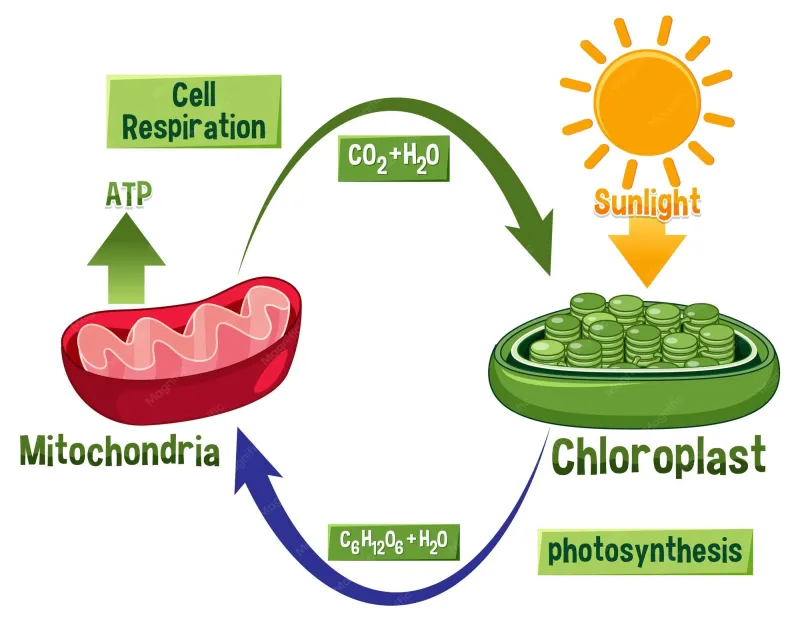
When plants photosynthesize, they draw carbon dioxide from the atmosphere and convert it into sugars. A significant portion of those sugars is transferred through plant roots to the surrounding soil, where microbial communities transform them into stable organic compounds—humus, glomalin, and other forms of soil organic matter. This process, broadly termed biological carbon sequestration, effectively removes CO₂ from the atmosphere and stores it underground.
The problem is that conventional tillage physically disrupts this system. When soil is turned over by a plow, it exposes organic matter to oxygen, triggering rapid decomposition and releasing stored carbon back into the atmosphere as CO₂. Repeated annually across hundreds of millions of acres, this process has made American cropland a net carbon emitter rather than a sink.
The Rodale Institute, one of the pioneering research organizations in regenerative agriculture, has estimated that if the world's cultivated soils were managed regeneratively, they could sequester more than 40 percent of current annual CO₂ emissions. That figure is contested by some researchers who argue the upper bounds are more modest, but even conservative estimates suggest soil represents a climate intervention of meaningful scale.
The Practices: Cover Crops, Reduced Tillage, and Integrated Livestock
Regenerative agriculture is not a single technique but a constellation of practices united by the principle of working with natural soil processes rather than against them.
Cover cropping involves planting non-cash crops—rye, clover, radishes, legumes—in fields between primary growing seasons. These plants protect bare soil from erosion, suppress weeds, and, critically, feed soil microbiota through root exudates. Leguminous cover crops also fix atmospheric nitrogen, reducing the need for synthetic fertilizers whose production is energy-intensive and whose application contributes to nitrous oxide emissions, a potent greenhouse gas.
Reduced and no-till farming minimizes mechanical soil disturbance, preserving the fungal networks and organic matter that conventional tillage destroys. No-till adoption has grown substantially in the US over the past two decades, with USDA data indicating that roughly 35 percent of planted cropland acres now employ some form of conservation tillage. The challenge is that no-till alone, without complementary practices, does not always guarantee carbon gains—soil health improvements are most robust when multiple regenerative methods are combined.
Integrated livestock management, perhaps the most nuanced of the core practices, involves grazing animals on cropland and pasture in patterns that mimic the movement of wild grazing herds. Properly managed, livestock hooves aerate compacted soil, and animal waste provides organic fertility. Gabe Brown, a North Dakota farmer whose operation has become something of a pilgrimage site for regenerative agriculture practitioners, has demonstrated over two decades that integrating cattle, sheep, and chickens into a diversified cropping system can dramatically improve soil organic matter while reducing input costs.
Farmers Leading the Way
The regenerative movement in the US is being driven not primarily by policy mandates but by farmers who have grown frustrated with the economic and ecological fragility of conventional systems.
In Kansas, third-generation farmer Kris Nichols abandoned synthetic inputs on her family's wheat operation after observing progressive soil degradation across decades. By transitioning to cover crop rotations and reduced tillage, she has documented measurable increases in soil organic matter and a corresponding reduction in irrigation requirements—a critical benefit in a region facing intensifying drought pressure.
In Georgia, a network of Black farmers affiliated with the Southeastern African American Farmers Organic Network (SAAFON) has embraced regenerative methods as both an ecological and economic strategy, finding that healthier soils reduce input costs while commanding premium prices in direct-to-consumer markets.
These stories share a common thread: regenerative practices often require a transition period of three to five years during which yields may be variable and upfront costs elevated. For many American farmers operating on thin margins with significant debt loads, that transition window represents a serious barrier.
Policy Levers and Financial Incentives
Scaling regenerative agriculture from a movement of pioneering adopters to a mainstream agricultural model will require structural support that individual farmers cannot generate alone.
The USDA's Conservation Stewardship Program (CSP) and Environmental Quality Incentives Program (EQIP) currently provide payments to farmers who adopt conservation practices, including cover cropping and reduced tillage. Environmental advocates argue these programs are chronically underfunded relative to the commodity crop subsidies that continue to incentivize conventional monoculture production.
Carbon markets represent another emerging mechanism. Companies including Indigo Ag and Nori have developed platforms through which farmers can earn payments for verified soil carbon sequestration, effectively monetizing the climate benefit of regenerative practices. The market is young and measurement methodologies remain inconsistent, but the framework offers a promising financial signal that could accelerate adoption.
At the federal level, the Inflation Reduction Act of 2022 allocated approximately $20 billion to agricultural conservation programs—the largest such investment in US history. How effectively those funds reach regenerative practitioners, rather than reinforcing existing conventional systems, will depend significantly on implementation decisions made at the USDA and at the state level.
The Long View on Living Soil
Regenerative agriculture asks something philosophically demanding of a culture accustomed to technological quick fixes: it asks for patience. Soil health is not restored in a single season. The microbial communities, fungal networks, and organic matter profiles that define a truly resilient soil take years, sometimes decades, to rebuild.
But the science is clear that the capacity exists. American farmland, once among the most biologically rich in the world, retains the potential to become so again. At Green String Institute, we see in regenerative agriculture not merely a farming technique but a reorientation of the human relationship with land—one that recognizes soil as a partner in the effort to sustain life on this planet rather than a substrate to be exploited.
The carbon stored beneath a well-managed cover crop is invisible. The farmer who planted it, and the policy that supported them, may never make headlines. But in the quiet work of rebuilding what industrial agriculture has diminished, some of the most consequential climate action in America may already be taking root.