What's Cooking Into Your Food: The Hidden Chemistry of Modern Kitchenware

Photo: Taylorderek, CC BY 4.0, via Wikimedia Commons
For decades, the American kitchen has been defined by convenience. Non-stick surfaces that require minimal oil. Flexible silicone tools that won't scratch delicate cookware. Plastic cutting boards marketed as more hygienic than wood. These innovations promised easier cooking and faster cleanup—but a growing body of scientific literature suggests that convenience may carry a cost that consumers have never seen listed on any product label.
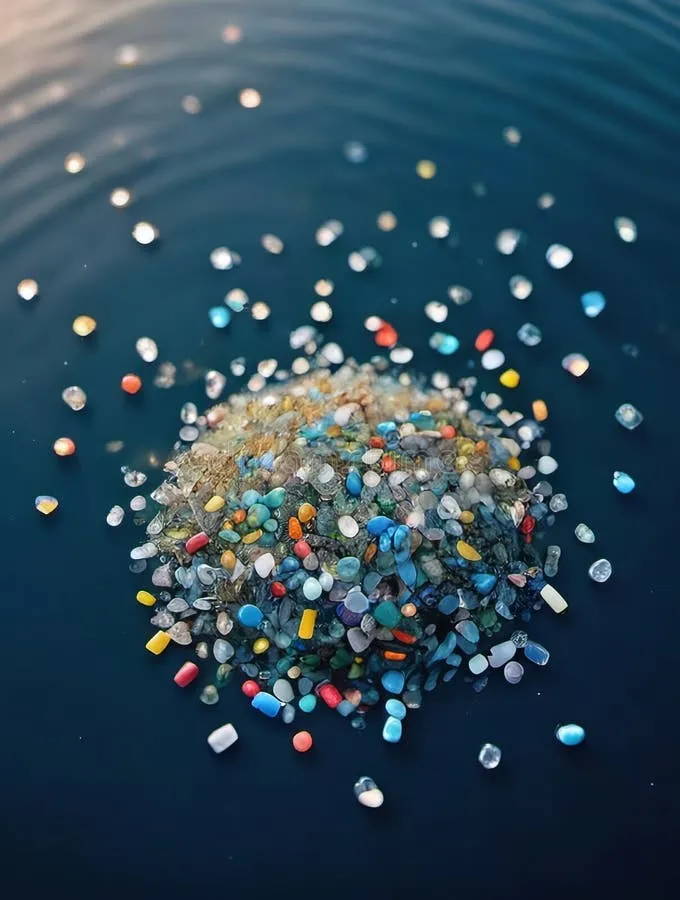
Microplastics—particles smaller than five millimeters, often invisible to the naked eye—have emerged as one of the defining environmental contaminants of our era. Researchers have detected them in the ocean, in Arctic ice cores, in human lung tissue, and now, with increasing regularity, in the food we cook at home.
The Non-Stick Problem
Perhaps no kitchen material has generated more scrutiny than polytetrafluoroethylene, widely known by the trade name Teflon. For years, the primary concern centered on perfluorooctanoic acid, or PFOA—a processing chemical used in the manufacture of traditional non-stick coatings that was phased out of US production by 2013 following regulatory pressure and mounting health evidence.
But the story did not end with PFOA. Manufacturers replaced it with a family of structurally similar compounds, broadly categorized as PFAS—per- and polyfluoroalkyl substances. These chemicals are sometimes called "forever chemicals" because they resist biological and environmental breakdown. Studies published in journals including Environmental Science & Technology have detected PFAS migration from coated cookware into food, particularly when pans are scratched, overheated, or aged.
Material scientists note that the coating itself—even absent PFAS concerns—can physically fragment under mechanical stress. A 2022 study from the University of Newcastle in Australia found that a single damaged non-stick pan could release tens of thousands of microplastic and nanoplastic particles into a single meal. While that research was conducted internationally, the cookware types tested are identical to those sold in American kitchens every day.
"The coating doesn't just stay on the pan," explained one materials researcher familiar with the study. "Once the surface is compromised, you're essentially adding an ingredient you never intended."
Silicone, Cutting Boards, and the Broader Kitchen Ecosystem
Non-stick coatings are not the only source of concern. Silicone bakeware and utensils—long marketed as a safer, more durable alternative to plastic—have faced increasing scrutiny. Silicone is technically a synthetic polymer, and while it is generally considered more chemically stable than many plastics, research has shown that low-quality silicone products, particularly those containing fillers, can leach siloxanes and other compounds when exposed to high heat or acidic foods.
Plastic cutting boards present a different but related issue. A 2023 study estimated that Americans who use plastic cutting boards may inadvertently consume hundreds of thousands of microplastic particles annually—simply from the act of cutting food. The particles shed during routine knife work are small enough to adhere to food surfaces and enter the digestive system without any visible indication.
Even the lining of canned goods and the coatings on some nonstick baking sheets contribute to what environmental health researchers describe as a cumulative dietary exposure to synthetic polymers. No single source is necessarily catastrophic, but the aggregate effect—meal after meal, year after year—is what concerns scientists most.
What the Research Still Cannot Tell Us
It is important to acknowledge the limits of current science. Researchers have established that microplastics enter the human body through food, water, and air. What remains less fully characterized is the precise dose-response relationship—that is, how much exposure causes what level of harm.
Some studies have linked microplastic ingestion to inflammation, endocrine disruption, and oxidative stress in laboratory models. A landmark 2024 study published in The New England Journal of Medicine found microplastic and nanoplastic particles in the arterial plaques of cardiovascular patients, associating higher concentrations with elevated risk of heart attack and stroke. Still, the field is young, and causation remains an active area of investigation.
What the scientific community broadly agrees on is the precautionary principle: given plausible mechanisms of harm and the near-ubiquity of exposure, reducing unnecessary contact with synthetic polymers in food preparation is a reasonable and prudent course of action.
Practical Guidance for American Consumers
Transitioning away from potentially problematic cookware does not require a complete kitchen overhaul. The following material choices are supported by available evidence and widely recommended by environmental health researchers:
Cast iron and carbon steel cookware have been used for centuries and contain no synthetic coatings. Properly seasoned, they develop natural non-stick properties over time. They are durable, repairable, and among the most environmentally sustainable options available.
Stainless steel is another well-established option. While it requires more attention to heat management and fat use, it contains no coatings that can degrade and offers excellent longevity.
Ceramic-coated cookware marketed as PFAS-free is a growing category. Consumers should look for third-party certifications and research specific brands, as the term "ceramic" covers a wide range of formulations.
Wooden and bamboo utensils and cutting boards are preferable to plastic alternatives for most cutting tasks. Wood has demonstrated natural antimicrobial properties, and unlike plastic, it does not shed synthetic particles during use.
For consumers who continue using non-stick cookware, the most critical precautions are avoiding high heat, never using metal utensils on coated surfaces, and replacing pans at the first sign of coating damage.
A Systems-Level Concern
At Green String Institute, we consistently return to a foundational principle: individual choices matter, but they exist within larger systems. The prevalence of synthetic materials in American kitchens is not simply a product of consumer preference—it reflects decades of industrial design, regulatory gaps, and marketing that prioritized convenience over comprehensive safety evaluation.
The PFAS contamination crisis, which has affected drinking water supplies across the country from Cape Fear, North Carolina to the Great Lakes region, illustrates what happens when chemical innovation outpaces accountability. The kitchen is simply one more arena where that dynamic has played out.
Advocating for stronger pre-market testing requirements for food-contact materials, supporting the EPA's ongoing efforts to regulate PFAS compounds, and demanding transparency from cookware manufacturers are systemic responses that complement individual consumer action.
The food we prepare at home should nourish us. Ensuring that the tools we use to prepare it do not quietly undermine that goal is both a personal health imperative and, given the scale of microplastic contamination in our broader environment, a matter of ecological urgency.