Invisible Contaminants, Real Consequences: What Scientists Are Finding in America's Water Supply
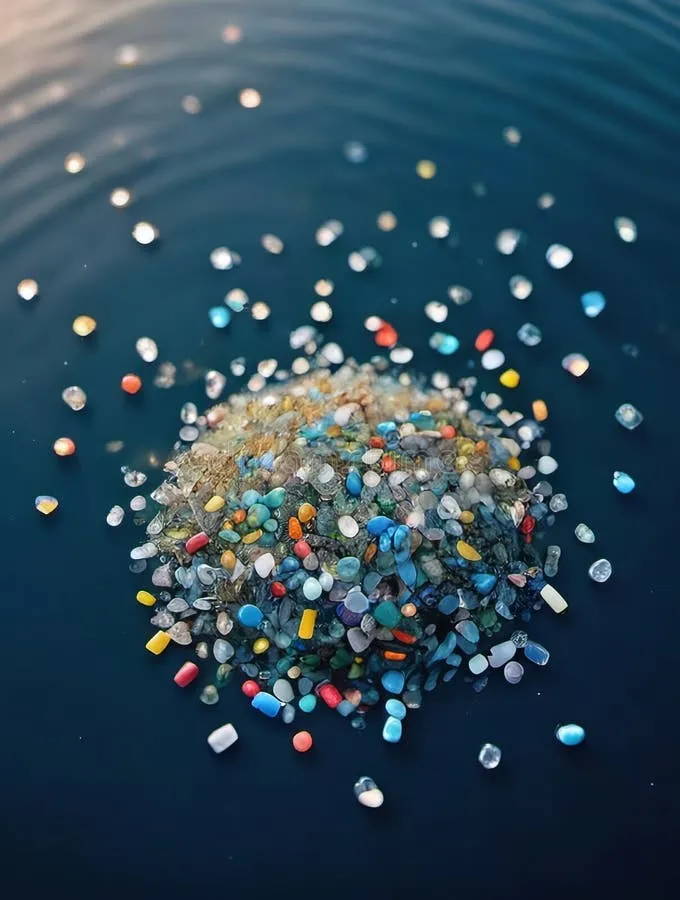
Photo: microplastics water contamination laboratory testing glass, via thumbs.dreamstime.com
For decades, the conversation about water quality in the United States centered on bacteria, heavy metals, and agricultural runoff. Those threats remain serious. But a quieter contamination crisis has been accumulating in parallel — one measured not in parts per million but in particles per liter, and one that no conventional municipal treatment system was ever designed to address.
Microplastics — fragments and fibers smaller than five millimeters, and often far smaller than that — have now been detected in tap water across all fifty states, in major bottled water brands, and even in remote mountain springs far removed from industrial activity. What scientists are beginning to understand about what happens when those particles enter the human body is generating genuine urgency in research communities and, increasingly, in regulatory circles.
How Pervasive Is the Problem?
A landmark 2018 study commissioned by Orb Media tested tap water samples from cities on five continents and found microplastic contamination in 94 percent of American samples — a higher rate than any other country tested. Subsequent research has only deepened that finding. A 2022 analysis published in Environmental Science & Technology estimated that Americans may consume between 74,000 and 121,000 microplastic particles annually through food and drink alone, with drinking water representing one of the most consistent exposure routes.
Bottled water, long marketed as a purer alternative, has fared no better under scrutiny. A study examining eleven globally popular bottled water brands found an average of 325 plastic particles per liter — roughly twice the concentration found in tap water from comparable regions. The irony is pointed: plastic packaging appears to be a significant source of the very contamination consumers are paying a premium to avoid.
The particles themselves arrive through multiple pathways. Synthetic textiles shed microfibers into wastewater systems. Plastic debris in rivers and coastal zones photodegrades into progressively smaller fragments. Industrial processes release plastic pellets — known as nurdles — into waterways. Even the lining of municipal water pipes, many of which are aging and deteriorating, contributes to contamination at the point of delivery.
What the Health Research Is Revealing
For years, the health implications of microplastic ingestion remained largely speculative, hampered by the difficulty of tracking particles once inside the body. That is beginning to change.
Researchers at the University of Hull and Hull York Medical School published findings in 2021 demonstrating that microplastics can cross biological membranes, including the gut lining — a discovery that challenged earlier assumptions about the body's ability to simply pass the particles harmlessly. A 2022 study in Environmental Health Perspectives detected microplastics in human blood samples, confirming systemic circulation. Most recently, Italian researchers published evidence of microplastic particles in human arterial plaque, raising questions about potential cardiovascular implications that the scientific community is now actively investigating.
Beyond the physical particles themselves, researchers are increasingly focused on what those particles carry. Microplastics act as vectors for persistent organic pollutants, endocrine-disrupting chemicals, and heavy metals — compounds that adsorb to plastic surfaces in the environment and may be released once inside biological tissue. Dr. Sherri Mason, a sustainability coordinator at Penn State Behrend and one of the leading researchers in this field, has described microplastics as "a Trojan horse" for chemical exposure.
It is worth noting that the science remains incomplete. Long-term epidemiological studies are still in early stages, and establishing definitive causal links between microplastic exposure and specific health outcomes in human populations requires years of rigorous follow-up. Regulatory agencies including the EPA and FDA have acknowledged the concern while stopping short of issuing formal exposure limits — a gap that critics argue leaves the public without meaningful protection.
Emerging Filtration Technologies
Conventional water treatment infrastructure — flocculation, sedimentation, sand filtration, chlorination — removes a meaningful proportion of microplastics, but not all, and not consistently. Particles smaller than one micron, including nanoplastics, pass through most standard treatment processes largely unimpeded.
Several technological approaches are showing genuine promise at both municipal and household scales.
Membrane filtration, particularly ultrafiltration and nanofiltration systems, can remove particles down to the nanometer range. A number of municipal utilities in Europe have already integrated ultrafiltration membranes into their treatment trains, and American cities including Denver and Seattle are piloting expanded membrane-based systems. The primary constraint remains cost — membrane infrastructure requires significant capital investment and ongoing maintenance — though economies of scale are improving the calculus.
Electrocoagulation, a process that uses electrical current to aggregate contaminants into larger, filterable clusters, has demonstrated removal efficiencies above 90 percent for microplastics in controlled trials. Startups including Axine Water Technologies are advancing commercial-scale applications, though most deployments to date have focused on industrial wastewater rather than drinking water.
At the household level, reverse osmosis systems with carbon block pre-filters represent the current gold standard for point-of-use microplastic reduction. Independent testing by organizations including NSF International has confirmed removal rates exceeding 99 percent for particles above a certain size threshold. The limitations — wastewater generation, filter replacement costs, and reduced flow rates — mean they are not universally practical, but for households with specific concerns, they represent a meaningful option available today.
What Consumers Can Do Now
While filtration technology advances and regulatory frameworks slowly evolve, individuals navigating this issue face a genuinely difficult information environment. A few evidence-based considerations are worth holding onto.
Switching from tap to bottled water is not a solution — and may, as noted, worsen exposure. Reducing overall plastic contact with food and beverages, particularly hot liquids, limits a significant secondary exposure pathway. Washing synthetic textiles in a microfiber-catching laundry bag — products like the Guppyfriend bag have peer-reviewed evidence supporting their efficacy — reduces the volume of fibers entering water systems in the first place.
For those considering household filtration, the NSF/ANSI 58 certification standard for reverse osmosis systems and the emerging NSF P473 protocol for pitcher filters both provide independent verification of performance claims. Not all filters marketed as "microplastic-reducing" have been independently validated.
Perhaps most importantly, this is not a problem amenable to individual consumer choice alone. The scale of microplastic contamination in American water infrastructure is a systemic challenge requiring systemic responses — updated treatment standards, accelerated pipe replacement programs, and upstream policies that reduce plastic production and improve waste management. Advocacy for those policy changes is, ultimately, as important as any filter a household can install.
The science on microplastics is moving faster than the regulatory and infrastructure systems designed to respond to it. Closing that gap is one of the defining environmental health challenges of the coming decade.