Neighbors With Nets: How Everyday Americans Are Building a National Map of Microplastic Contamination

Photo: citizen scientist collecting water sample river pollution testing, via www.kart-sim.com
On a Tuesday morning in Duluth, Minnesota, a retired schoolteacher named Carol Voss fills a clean glass jar from the tap in her kitchen, seals it, and logs its coordinates into a shared spreadsheet. She has done this every week for fourteen months. Three hundred miles south, in a Chicago suburb, a high school chemistry teacher supervises a group of students as they press adhesive-coated slides against window screens to capture what drifts through the outdoor air. In Tucson, a water quality advocate collects sediment from a dry riverbed using a stainless-steel spoon and a sterile sample bag.
None of these people are credentialed environmental scientists. Yet together, they are part of an expanding citizen science infrastructure that is producing some of the most geographically comprehensive microplastic data the country has ever seen.
The Monitoring Gap That Volunteers Are Filling
Microplastics — fragments and fibers smaller than five millimeters, often invisible to the naked eye — have been detected in human blood, breast milk, lung tissue, and placentas. They have been found in the deepest ocean trenches and at the summit of Mount Everest. Yet despite this evidence of near-universal environmental penetration, the United States lacks a coordinated federal monitoring program for microplastic contamination in air, soil, or drinking water at the community scale.
The Environmental Protection Agency has acknowledged microplastics as an emerging contaminant of concern, but regulatory frameworks remain underdeveloped and sampling infrastructure is inconsistent. Academic researchers have produced landmark studies, though these tend to focus on specific ecosystems or geographic regions, leaving enormous data gaps across vast stretches of the country.
Into that void, citizen scientists have stepped — not as a symbolic gesture, but as a genuine epistemic force.
Organizations such as the Adventure Scientists, the Rozalia Project, and university extension programs have developed accessible, low-cost sampling methodologies that allow participants with minimal laboratory training to collect reliable data. When protocols are standardized and quality-controlled, the resulting datasets carry meaningful scientific weight.
Tools of the Trade: DIY Methods That Deliver Real Data
The methodologies being used across these grassroots networks are more sophisticated than they might appear. Atmospheric deposition sampling — the practice of leaving open containers outdoors to capture particles that fall from the air — has been validated in peer-reviewed research and is now being deployed by volunteer networks in dozens of American cities. Participants follow strict protocols: containers must be made of glass or stainless steel, never plastic; collection periods are precisely timed; and samples are shipped to partner laboratories using standardized preservation procedures.
For water sampling, volunteers use fine-mesh filters — often repurposed from aquarium supply stores or fabricated from stainless-steel mesh with documented pore sizes — to strain particles from tap water, well water, creek water, and stormwater runoff. Some programs have developed low-cost spectrometry partnerships with university labs, where samples can be analyzed using Fourier-transform infrared spectroscopy to identify the polymer types present.
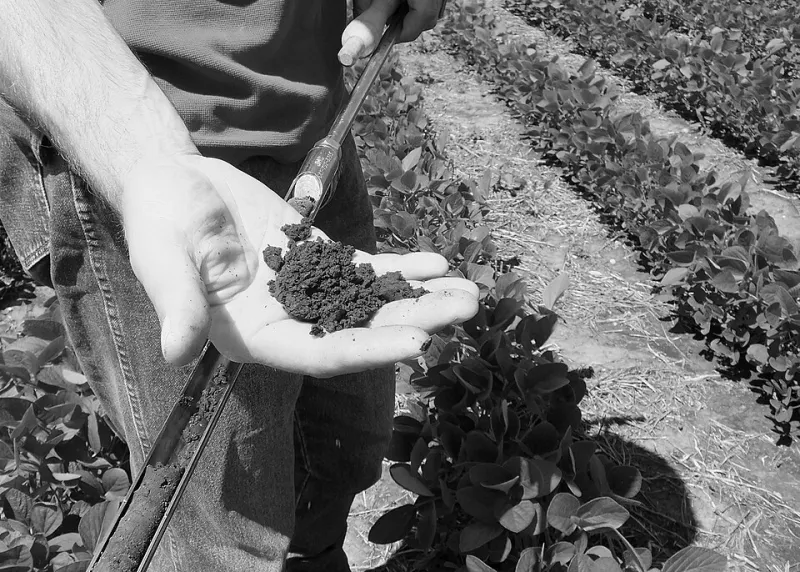
Soil sampling protocols, adapted from agricultural soil health programs, allow participants to collect cores from gardens, parks, and vacant lots, which are then dried and examined under magnification. Some programs have distributed modified smartphone camera attachments that, when combined with polarized light filters, allow volunteers to identify synthetic fibers in field samples without laboratory equipment.
The sophistication of these methods reflects a broader maturation in the citizen science field — a recognition that rigor and accessibility are not mutually exclusive.
What the Data Is Already Revealing
Preliminary findings from these distributed monitoring efforts are generating a picture of microplastic pollution that is both expected and alarming in its specificity.
In communities adjacent to textile manufacturing facilities in North Carolina and Georgia, volunteer air samplers have documented elevated concentrations of polyester and nylon fibers — a signature consistent with industrial emissions from synthetic fabric processing. In agricultural regions of California's Central Valley, soil samples collected near fields irrigated with treated wastewater show polymer concentrations that correlate with known sources of biosolid application. Along the Great Lakes shoreline, water sampling data collected by volunteer networks has helped researchers identify seasonal variation in microplastic load, with peak concentrations following storm events that flush urban runoff into tributary systems.
Perhaps most significantly, several citizen science programs have documented measurable microplastic concentrations in municipal drinking water systems that serve communities where no prior testing had been conducted. These findings have, in some cases, prompted local water utilities to commission independent testing — and, in a handful of instances, to begin exploring filtration upgrades.
From Spreadsheets to Statehouse: The Policy Dimension
The political potential of crowdsourced environmental data is increasingly apparent. In California, citizen-collected microplastic data contributed to the body of evidence that informed Senate Bill 1422, which required the State Water Resources Control Board to adopt a definition of microplastics and develop standardized testing and reporting requirements for drinking water. It was the first legislation of its kind in the nation.
In other states, community monitoring groups have brought their data directly to county commissioners, city councils, and state environmental agencies — not as advocacy materials alone, but as documented evidence demanding a formal response. The shift is meaningful: rather than relying on anecdote or imported research, local residents are arriving at public meetings with their own numbers.
Corporate accountability is also beginning to feel the pressure. Several consumer goods companies and packaging manufacturers have faced pointed questions from investors and NGOs citing citizen science data to challenge corporate sustainability claims. When a community's own tap water data contradicts a company's environmental stewardship narrative, the reputational stakes become concrete.
Challenges and the Road Toward Integration
Citizen science is not without its limitations. Sampling inconsistency, chain-of-custody issues, and the challenge of distinguishing background contamination from source-specific pollution remain real methodological concerns. Some researchers caution that without rigorous quality assurance, community-collected data risks being dismissed by regulatory bodies or challenged in legal proceedings.
These are legitimate concerns, and the most effective citizen science programs take them seriously. Increasingly, academic institutions are formalizing partnerships with volunteer networks — providing laboratory access, analytical support, and co-authorship on peer-reviewed publications. This kind of integration strengthens the scientific credibility of community data while giving researchers access to geographic coverage they could never achieve on their own.
The question of data sovereignty is also emerging as an important consideration. Who owns the data collected by community volunteers? How is it stored, shared, and used? Progressive frameworks in this space argue that communities should retain meaningful control over the findings generated from their own neighborhoods, particularly when those findings carry regulatory or legal implications.
A Science Built From the Ground Up
There is something structurally important about a monitoring system built from the bottom up. Centralized environmental agencies, however well-resourced, cannot be everywhere at once. They cannot sample every creek, every schoolyard, every kitchen tap. But communities can — and increasingly, they are choosing to.
The microplastic detectives mapping contamination across America are not waiting for permission to understand what is in their water, their soil, and their air. They are developing the tools, learning the protocols, and building the networks to find out for themselves. In doing so, they are producing something that formal institutions have long struggled to generate at this scale: a living, continuously updated, community-rooted portrait of an invisible pollution crisis.
The data they are gathering may ultimately prove to be among the most consequential environmental records of this decade — not because it was collected in a laboratory, but precisely because it was not.