Roots of Renewal: How Fungal Partnerships Are Quietly Revolutionizing American Farmland
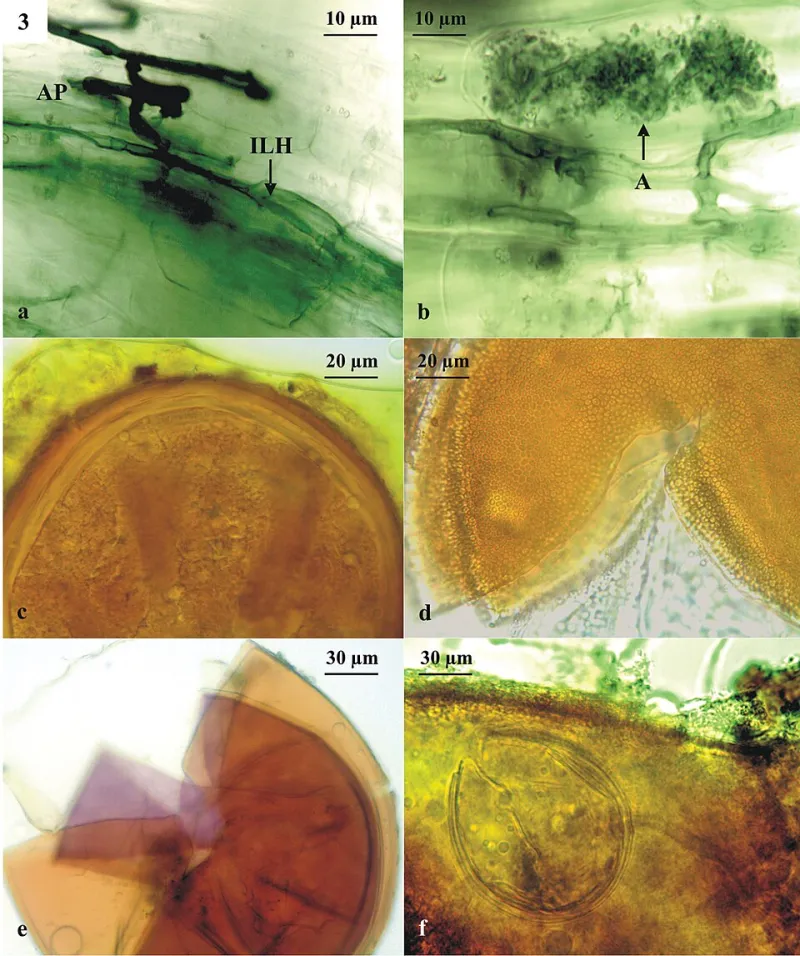
Photo: Bidondo LF, Colombo RP, Recchi M, Silvani VA, Pérgola M, Martínez A, Godeas AM (2018) Detection of arbuscular mycorrhizal fungi associated with pecan (Carya illinoinensis) trees by molecular and morphological approaches. MycoKeys 42: 73-88. https:/
For most of the twentieth century, American agriculture operated on a straightforward premise: give crops what they need through external inputs, and yields will follow. Synthetic fertilizers, herbicides, and fungicides became the dominant tools of productivity. What that paradigm systematically overlooked, however, was a living infrastructure already present in healthy soils — one that plants had been relying on for more than 400 million years.
Mycorrhizal fungi form symbiotic relationships with the root systems of roughly 90 percent of all land plants. In exchange for sugars produced through photosynthesis, these fungi extend threadlike structures called hyphae deep into the surrounding soil, vastly expanding a plant's effective reach. The result is not merely a transactional exchange but a dynamic, interconnected web through which water, phosphorus, nitrogen, and even chemical distress signals can travel between neighboring plants. Scientists have begun calling it, with increasing seriousness, the "wood wide web" of the soil — though its implications for row-crop agriculture may ultimately prove more consequential than its forest-based counterpart.
What Conventional Farming Broke — and Why It Matters
The industrialization of American agriculture did not just reduce biodiversity above ground. Tillage, synthetic phosphorus application, and broad-spectrum fungicide use have collectively degraded mycorrhizal communities across tens of millions of acres of Midwestern farmland. When soil is repeatedly inverted by a plow, fungal hyphae — which take considerable time and energy to establish — are physically severed. When phosphorus is applied in excess, plants have little incentive to maintain their fungal partnerships, and those relationships quietly dissolve.
The consequences extend well beyond the loss of a biological curiosity. Soils stripped of functional mycorrhizal networks tend to compact more readily, retain less water, and require ever-increasing volumes of synthetic inputs to maintain yields. In drought years — which climate projections suggest will become more frequent across the Great Plains and Corn Belt — crops with diminished fungal partnerships are markedly more vulnerable. The fungi, it turns out, were doing an enormous amount of work that fertilizer bags simply cannot replicate.
Farmers at the Frontier
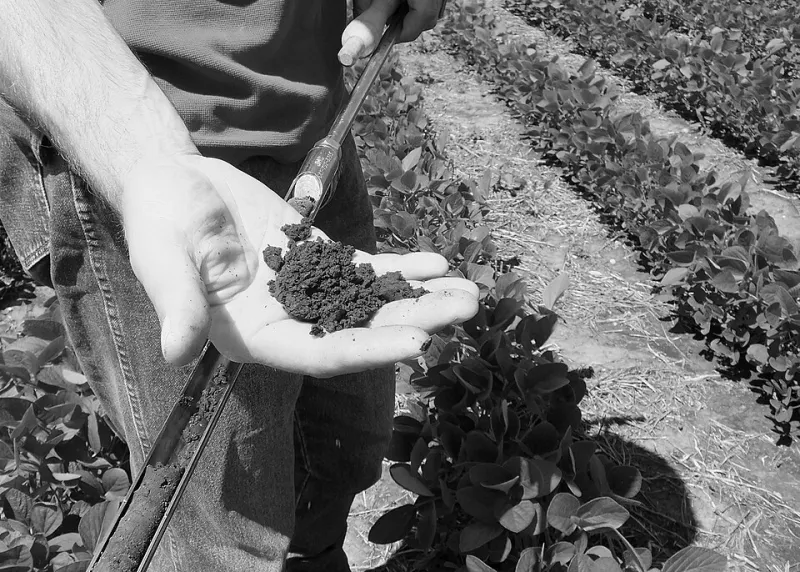
In Illinois, Iowa, and Kansas, a growing cohort of farmers is experimenting with management practices designed to restore and protect mycorrhizal communities. Their methods vary, but several principles have emerged with consistency.
Cover cropping has become one of the most widely adopted strategies. By keeping living roots in the soil during off-seasons, farmers maintain a continuous host for fungal networks rather than allowing them to collapse between cash crop cycles. Legumes, brassicas, and grasses each support different fungal communities, and diverse cover crop mixes appear to encourage broader mycorrhizal diversity — a resilience factor that researchers are only beginning to quantify.
Reduced or no-till cultivation is equally critical. Across farms in Indiana and Nebraska where tillage has been eliminated or dramatically curtailed, soil scientists have documented measurable recoveries in hyphal density within just three to five growing seasons. These recoveries correlate with improvements in aggregate soil structure, water infiltration rates, and, in some cases, reduced fertilizer requirements.
Perhaps most intriguingly, some farmers have begun applying commercially produced mycorrhizal inoculants directly to seed at planting. While the science on inoculant efficacy remains nuanced — results depend heavily on existing soil biology and management context — early field trials at institutions including the Rodale Institute and several land-grant universities suggest meaningful yield benefits under stress conditions, particularly drought.
The Science Catching Up to the Soil
Research into agricultural mycorrhizal systems has accelerated considerably over the past decade, driven in part by advances in environmental DNA sequencing that allow scientists to identify and quantify fungal species directly from soil samples without culturing them in a laboratory. This has opened a window onto the staggering diversity of mycorrhizal communities in healthy soils — and the equally striking impoverishment of those communities in conventionally managed fields.
At the University of Minnesota's College of Food, Agricultural and Natural Resource Sciences, researchers are mapping mycorrhizal community composition across a range of management systems, seeking to identify which fungal species are most critical for nutrient cycling and drought resilience. Their preliminary findings suggest that management history matters enormously: soils that have been under continuous no-till for a decade or more harbor significantly more diverse and functionally active fungal communities than those recently converted from conventional tillage.
Meanwhile, scientists at the USDA's Agricultural Research Service are investigating how specific mycorrhizal species interact with the microbial communities surrounding plant roots — the rhizosphere — to influence nutrient availability. The emerging picture is one of extraordinary biological complexity, in which fungi serve not merely as passive conduits but as active regulators of soil chemistry.
Rethinking the Input Model
The economic implications of functional mycorrhizal networks are not trivial. Phosphorus fertilizer, one of the primary synthetic inputs that mycorrhizal fungi can partially substitute, is derived from finite rock phosphate deposits. Prices are volatile and, over the long term, trending upward as accessible reserves diminish. Farmers who can reduce their dependence on purchased phosphorus through biological systems gain a meaningful buffer against input cost volatility.
Water use efficiency presents an equally compelling case. Mycorrhizal hyphae access pore spaces in soil that plant roots physically cannot reach, effectively extending the drought tolerance of host plants. In regions where groundwater depletion from irrigation is an escalating crisis — the Ogallala Aquifer, which underlies much of the High Plains, has seen dramatic declines over recent decades — any biological mechanism that reduces irrigation demand carries significant long-term value.
A Systems Shift, Not a Silver Bullet
It would be a disservice to the science to present mycorrhizal restoration as a simple fix for the accumulated damage of industrial agriculture. Rebuilding functional fungal networks requires sustained commitment to practices that conflict with the economic incentives of conventional commodity farming: less tillage, more crop diversity, reduced synthetic inputs, and patience measured in years rather than seasons.
But the trajectory of the research, and the testimony of farmers who have made the transition, points toward something more than incremental improvement. Farms that have successfully rebuilt their soil biology report not just reduced input costs but a qualitatively different relationship with their land — one in which the soil itself becomes an active partner in production rather than an inert medium requiring constant management.
For an agricultural system facing the compounding pressures of climate disruption, input cost volatility, and growing consumer demand for ecologically responsible food, that kind of partnership may prove to be among the most valuable investments American farmers can make. The fungal networks were always there, doing their quiet work. The task now is learning to work with them again.