The Living Darkness Below: Why Soil Microbiomes May Be America's Most Powerful Climate Tool
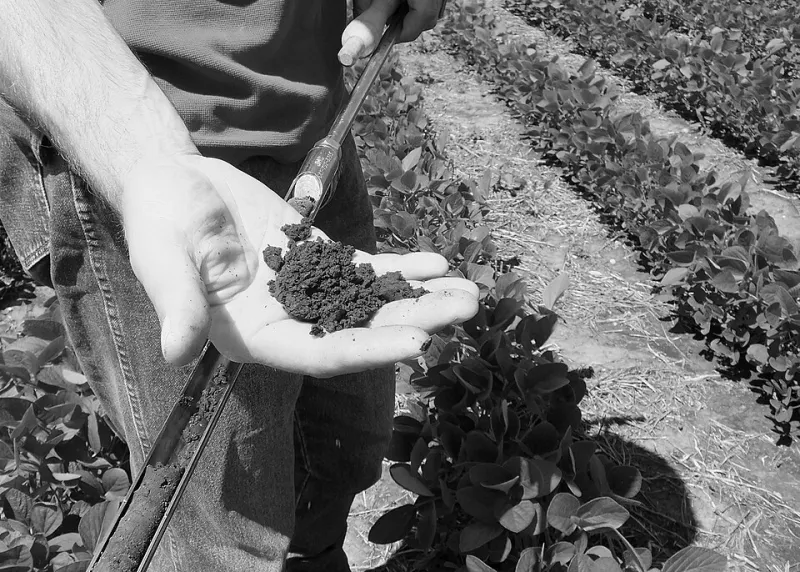
Photo: USDA NRCS South Dakota, Public domain, via Wikimedia Commons
Ask most Americans where carbon goes when it disappears from the atmosphere, and the answers will tend toward the predictable: trees, oceans, perhaps a solar panel on a rooftop. Rarely does anyone gesture toward the ground beneath their feet. Yet some of the most compelling climate science emerging from American research institutions in the past decade points to a single, largely invisible system as a carbon reservoir of extraordinary—and largely untapped—potential: the soil microbiome.
This is not a metaphor. The biological community residing in a single teaspoon of healthy agricultural soil can contain upward of one billion bacteria, several yards of fungal filaments, thousands of protozoa, and hundreds of nematodes. These organisms do not simply coexist. They form intricate, interdependent networks that regulate nutrient cycling, water retention, plant health, and, critically, the long-term storage of atmospheric carbon.
A World Science Is Only Beginning to Understand
For much of the twentieth century, soil was treated primarily as a physical medium—a substrate in which crops could be anchored and to which fertilizers could be applied. The biological dimension was acknowledged in textbooks but rarely prioritized in policy or practice. That understanding has shifted dramatically.
Advances in genomic sequencing have allowed researchers to map the microbial communities inhabiting American soils with unprecedented resolution. Studies conducted at institutions including the USDA's Agricultural Research Service and land-grant universities across the Midwest have revealed that soil microbial diversity is not uniform—it varies enormously depending on land management history, crop rotation, tillage intensity, and chemical inputs. More importantly, those variations correlate directly with a soil's capacity to capture and retain carbon.
The mechanism is more elegant than it might initially appear. When plants photosynthesize, they draw carbon dioxide from the atmosphere and convert it into sugars. A significant portion of those sugars—estimates range from 20 to 40 percent of total photosynthate—are pumped directly into the root zone as exudates, essentially liquid carbon released into the surrounding soil. Bacteria and fungi consume these exudates, and in doing so, they build their own biomass, which is itself carbon-rich. When those microorganisms die, much of their cellular material is incorporated into stable organic compounds that can persist in the soil for decades, or even centuries.
This process, increasingly referred to in the scientific literature as the "microbial carbon pump," is not incidental to soil formation. It is foundational to it.
How Conventional Agriculture Disrupts the System
The industrialization of American agriculture over the past seventy years has been, from the perspective of soil biology, a sustained disruption. Tillage—the mechanical turning and breaking of soil—physically destroys fungal networks that require years to develop. Synthetic nitrogen fertilizers, while effective at boosting short-term crop yields, suppress the microbial communities that would otherwise make nitrogen available through biological processes, effectively rendering the biological system redundant and allowing it to atrophy.
Perhaps most damaging is the widespread use of broad-spectrum herbicides and pesticides, many of which have been shown to alter microbial community composition even at sub-lethal concentrations. Research published in peer-reviewed journals has documented significant reductions in the diversity and abundance of beneficial soil fungi—particularly mycorrhizal species—in fields with long histories of chemical-intensive management.
The consequences extend well beyond carbon. Degraded soils hold less water, making farms more vulnerable to both drought and flood. They produce crops with lower nutritional density. And they release, rather than sequester, carbon—transforming what could be a climate asset into a climate liability.
Across the United States, it is estimated that agricultural soils have lost between 50 and 70 percent of their original carbon stocks since European settlement. Restoring even a fraction of that carbon through biological means would represent a measurable contribution to national climate targets.
Regenerative Practices as Biological Restoration
The good news, and it is genuinely good news, is that soil microbiomes are not static. They respond to changes in management with a speed and resilience that has surprised many researchers.
Farmers across the American Midwest, Great Plains, and Pacific Northwest who have adopted regenerative practices—cover cropping, reduced or no-till cultivation, diverse crop rotations, and the integration of livestock—are documenting measurable improvements in soil organic matter within three to five years. Some are reporting improvements in as few as eighteen months.
Cover crops are particularly significant. By maintaining living root systems in the soil year-round rather than leaving fields bare during winter months, farmers sustain the flow of root exudates that feed microbial communities. Species diversity in cover crop mixes appears to matter as well: polyculture plantings support a broader range of microbial specialists than monoculture covers, producing soils with greater functional complexity and, preliminary evidence suggests, greater carbon stability.
The integration of livestock, managed through rotational or adaptive multi-paddock grazing systems, adds another layer of biological stimulus. Grazing animals stimulate plant regrowth, which drives additional root exudate production. Their manure introduces microbial inoculants and organic matter simultaneously. When managed appropriately—avoiding overgrazing that strips vegetative cover—livestock can accelerate soil carbon accumulation rather than deplete it.
Scaling What Already Works
The challenge facing policymakers and agricultural institutions is not a lack of knowledge about what works. It is a structural one. Federal farm policy has historically incentivized yield maximization through chemical-intensive methods, creating economic conditions in which regenerative transition carries short-term financial risk that many farm operators cannot absorb alone.
There are encouraging signs of change. The USDA's Regional Conservation Partnership Program has begun directing funding toward soil health outcomes, and several states—including California, Colorado, and Minnesota—have introduced programs that compensate farmers for measurable increases in soil organic carbon. Carbon market mechanisms, while still maturing and not without controversy regarding verification standards, are beginning to create additional revenue streams for producers who can document sequestration outcomes.
Research institutions are also playing a critical role. Organizations working at the intersection of microbiology and agronomy are developing field-deployable tools that allow farmers and extension agents to assess soil microbial health with the same ease that they currently test for pH or nutrient levels. Making biological data accessible and actionable is a prerequisite for widespread adoption.
The Ground Beneath the Conversation
Climate policy debates in the United States tend to focus on energy systems—on the decarbonization of electricity generation, transportation, and heavy industry. These transitions are necessary and urgent. But they address the flow of carbon into the atmosphere without adequately accounting for the biological infrastructure that could be drawing it back out.
The soil microbiome does not require new technology. It does not require a manufacturing supply chain or a federal construction project. It requires, primarily, the cessation of practices that suppress it and the adoption of practices that allow it to recover. In a nation with nearly 900 million acres of agricultural land, that represents a carbon opportunity of a scale that no solar array or wind turbine can replicate on its own.
The science is not complete—it rarely is. But the direction it points is clear enough to act on. The most sophisticated carbon capture technology available to American agriculture may already be present, waiting in the darkness beneath the plow line, for the conditions that allow it to work.