What's Cooking Into Your Food: The Science of Kitchen Plastics and the Safer Alternatives Worth Knowing

Photo: non-stick cookware scratched Teflon pan kitchen close-up, via i.ytimg.com
For decades, the American kitchen has been engineered around convenience. Non-stick coatings promised effortless cleanup. Flexible silicone tools offered heat resistance without the bulk of metal. Inexpensive plastic cutting boards became a staple in households across the country. What the manufacturers of these products rarely advertised — and what scientists are now urgently investigating — is the possibility that each of these innovations may be introducing a new category of contaminant directly into our meals.
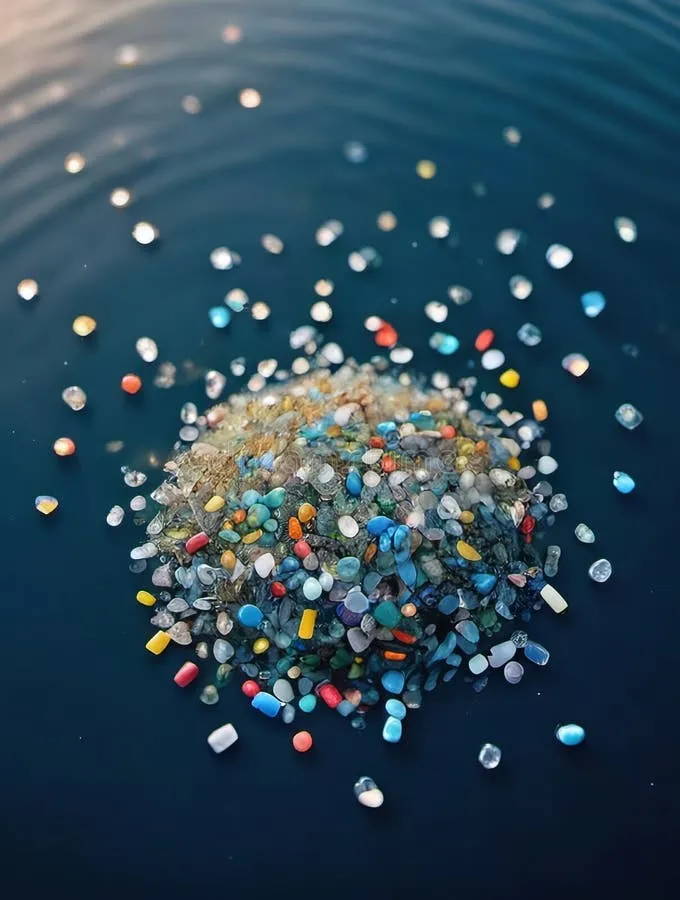
Microplastics, defined as plastic particles smaller than five millimeters and often far tinier than that, have already been documented in ocean water, drinking supplies, and human blood. Now a growing body of peer-reviewed research is turning its attention to the kitchen itself, asking a pointed question: how much are we consuming simply by preparing food?
The Non-Stick Problem
Polytetrafluoroethylene, widely known by the brand name Teflon, has coated American cookware for generations. When intact, these surfaces are generally considered chemically inert. The complication arises with wear. A 2022 study published in the journal Science of the Total Environment found that a scratched non-stick pan could release hundreds of thousands of microplastic and nanoplastic particles into a single meal. Nanoplastics — particles measured in billionths of a meter — are particularly concerning because their extreme smallness allows them to penetrate cell membranes in ways that larger particles cannot.
The fluoropolymer compounds involved, often grouped under the umbrella term PFAS (per- and polyfluoroalkyl substances), have attracted significant regulatory attention in the United States. The Environmental Protection Agency has taken steps in recent years to restrict certain PFAS compounds in drinking water, reflecting growing scientific consensus that these so-called "forever chemicals" accumulate in human tissue and are associated with a range of adverse health outcomes, including disrupted hormonal function and elevated cancer risk in some study populations.
The critical variable for consumers is condition. A non-stick pan that remains unscratched and is used at moderate temperatures poses a different risk profile than one that has been abraded by metal utensils or overheated on a high burner. The problem, of course, is that most cookware in active household use is not pristine.
Cutting Boards: A Surface Worth Reconsidering
Plastic cutting boards occupy nearly every American kitchen, often promoted as more hygienic than their wooden counterparts because they can be run through a dishwasher. That hygiene argument has been complicated by newer findings. Research from the University of California, Davis, estimated that plastic cutting boards used over their typical lifespan could shed between 14 and 71 grams of microplastic material — some of which inevitably ends up in food being prepared on that surface.
The mechanics are straightforward: knife strokes physically scrape material from the board's surface. Harder plastics such as high-density polyethylene shed particles at different rates than softer varieties, but no common plastic board material has been shown to be entirely resistant to this form of degradation. Boards that show deep knife grooves — a condition familiar to anyone who cooks regularly — are releasing the greatest quantity of particles.
Silicone's Complicated Reputation
Silicone kitchen tools occupy an interesting middle ground in this discussion. Technically a synthetic polymer rather than a traditional plastic, silicone has been broadly marketed as a safer, more stable alternative. The material is indeed more thermally stable than polyethylene or polypropylene, and it does not contain the bisphenol compounds that prompted widespread concern about older plastic food containers.
Nevertheless, silicone is not inert under all conditions. Studies examining silicone bakeware and utensils have detected the migration of siloxane compounds — the chemical building blocks of silicone — into food, particularly when the material is exposed to high heat or acidic ingredients. The long-term health implications of siloxane exposure through dietary routes remain an active area of investigation, and researchers caution against assuming that "silicone" is synonymous with "safe" without further qualification.
What the Body Is Actually Accumulating
The downstream health question is difficult to answer with finality because the science is genuinely young. Human exposure to microplastics through food is now well-documented — particles have been detected in placentas, lung tissue, and arterial plaque in recent studies. A landmark 2024 study published in the New England Journal of Medicine found that patients with microplastics present in their carotid artery plaque had a significantly elevated risk of cardiovascular events compared to those without detectable particles.
What remains less clear is the precise contribution of kitchen cookware relative to other exposure pathways — including food packaging, bottled water, and airborne particles. Researchers at institutions including the National Institute of Environmental Health Sciences are working to develop more standardized methods for measuring dietary microplastic intake, a prerequisite for establishing dose-response relationships that could inform regulatory action.
Practical Alternatives That Hold Up in the Kitchen
The good news for consumers is that evidence-based alternatives exist for virtually every high-risk kitchen item, and many of them outperform their plastic counterparts in durability and long-term value.
Cast iron and carbon steel cookware have experienced a well-deserved resurgence. Both materials develop natural non-stick properties through seasoning — a process of polymerizing oils onto the cooking surface — and neither sheds synthetic particles. Properly maintained cast iron can last generations. Stainless steel, while requiring slightly more technique to prevent sticking, is another robust option with no coating to degrade.
Wood and bamboo cutting boards have been vindicated by food safety research. Studies at UC Davis found that bacteria drawn into the grain structure of wooden boards do not readily multiply and often die off, while the surface itself does not shed material in the way plastic does. End-grain hardwood boards, though a larger upfront investment, are particularly durable.
Glass, ceramic, and stainless steel food storage containers eliminate the microplastic migration associated with plastic containers, especially when food is reheated. The transition away from plastic storage is one of the most straightforward changes a household can make.
For consumers who prefer to retain some silicone tools, limiting their use at very high temperatures and replacing items that show visible degradation or discoloration is a reasonable precaution given current evidence.
A Systems-Level View
At Green String Institute, we recognize that individual consumer decisions, while meaningful, operate within a broader industrial and regulatory framework that shapes what products reach store shelves in the first place. The microplastic contamination emerging from American kitchens is not primarily a story of consumer carelessness — it is a story of materials being deployed in food-contact applications without adequate long-term safety evaluation.
Advocating for stronger pre-market safety standards for food-contact materials, supporting research into biodegradable and genuinely inert alternatives, and pushing for transparent labeling that allows consumers to make informed decisions are all necessary complements to individual action. The kitchen is an intimate space where science and daily life intersect in the most direct possible way. What we learn there has implications that extend far beyond the dinner table.