The Quiet Imperative: Why Cities Are Learning to Treat Silence as Environmental Infrastructure

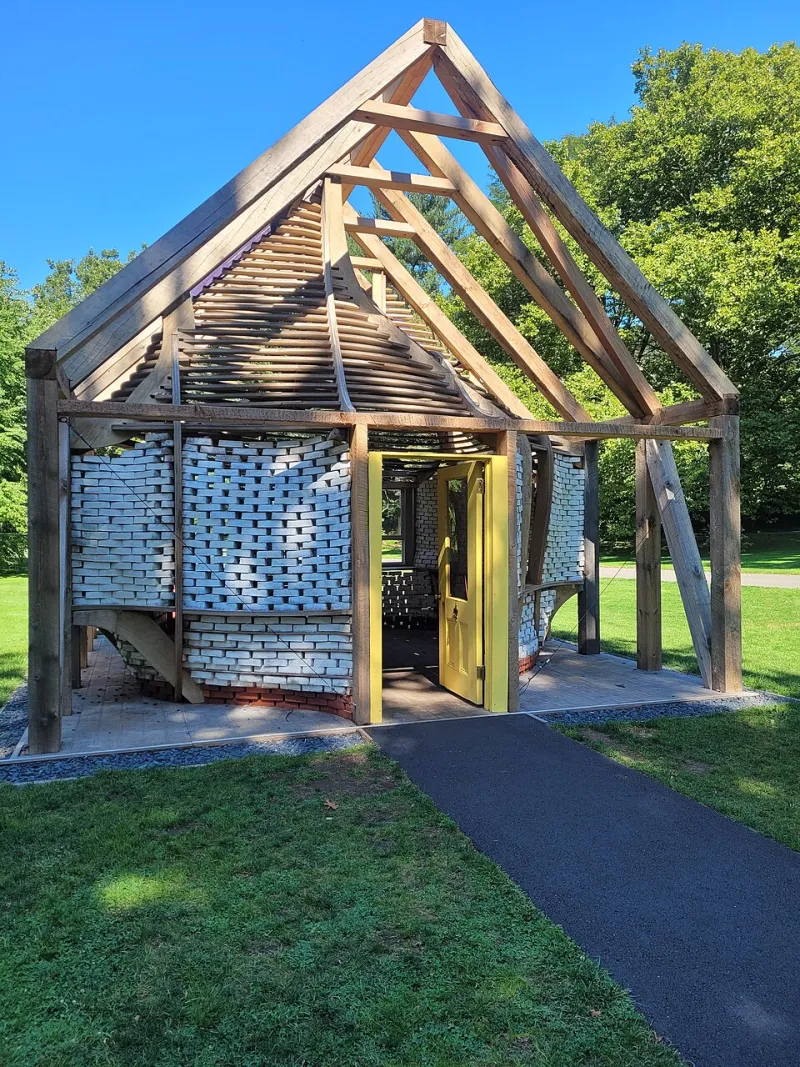
Photo: PattayaPatrol, CC BY-SA 4.0, via Wikimedia Commons
Ask most Americans what they value about an urban park, and they will describe shade trees, open lawns, perhaps a jogging path or a community garden. Rarely does anyone mention what they cannot hear. Yet researchers working at the intersection of landscape architecture, neuroscience, and wildlife biology are making a persuasive case that the acoustic character of a green space may matter as much as its visual or thermal properties — and that cities ignoring this dimension are leaving significant public health and ecological benefits on the table.
The discipline known as acoustic ecology, which traces its origins to the work of Canadian composer and environmentalist R. Murray Schafer in the 1960s, has evolved considerably in the intervening decades. What was once a largely philosophical framework for appreciating the "soundscape" of natural environments has become a data-rich scientific field, equipped with remote sensing arrays, machine learning classifiers, and epidemiological tools capable of linking noise exposure to measurable health outcomes. The findings are difficult to dismiss.
What the Research Reveals About Noise and Human Health
The World Health Organization has estimated that environmental noise — primarily from road traffic, aviation, and industrial activity — is responsible for the loss of at least one million healthy life years annually across Western Europe alone. In the United States, the Environmental Protection Agency has not issued comprehensive community noise regulations since the Reagan administration effectively defunded the federal noise control program in 1982, a policy gap that researchers argue has allowed urban acoustic environments to deteriorate without meaningful accountability.
The consequences extend well beyond annoyance. Chronic exposure to ambient noise above 55 decibels has been associated with elevated cortisol levels, disrupted sleep architecture, increased cardiovascular risk, and diminished cognitive performance in children attending schools near highways or flight paths. Conversely, studies conducted in urban parks have found that the presence of natural sounds — birdsong, rustling foliage, moving water — can measurably reduce self-reported stress and lower physiological markers of anxiety within minutes of exposure. The mechanism appears to involve the autonomic nervous system's response to soundscapes that our evolutionary history has conditioned us to associate with safety.
What is particularly significant for urban planners is that these restorative effects are not simply a function of being outdoors or surrounded by vegetation. Researchers at the University of Surrey and, more recently, teams at several U.S. institutions have demonstrated that the ratio of natural to anthropogenic sound within a green space is a stronger predictor of psychological restoration than the size of the space or even the density of its planting. A park bisected by a busy arterial road, in other words, may offer far less restorative value than its acreage would suggest.
Mapping the Acoustic Landscape
In response to this evidence, a small but growing number of American cities have begun incorporating acoustic mapping into their environmental planning processes. Portland, Oregon, and San Francisco have experimented with sound-level monitoring networks that overlay acoustic data onto existing green infrastructure maps, identifying corridors where noise pollution undermines the intended benefits of park investment. Minneapolis has piloted a program that evaluates proposed green space designs not only for stormwater management and urban heat island mitigation, but for their projected acoustic performance.
The tools enabling this work have become considerably more sophisticated. Bioacoustic monitoring platforms that once required expensive proprietary hardware can now be assembled from open-source components and solar-powered sensors, making community-led acoustic surveys increasingly feasible. Citizen science networks have begun generating rich datasets from neighborhoods that municipal monitoring programs have historically overlooked, often revealing dramatic acoustic disparities between affluent and lower-income communities — a pattern that researchers are beginning to frame explicitly as an environmental justice issue.
Engineering Ecosystems for Quiet
Perhaps the most promising development in this field is the growing body of evidence that vegetation, when designed thoughtfully, can function as genuine acoustic infrastructure. Dense plantings of mixed-species shrubs and trees have long been used as noise barriers along highways, but the science has advanced considerably beyond simple sound-wall substitution. Research published in journals including Landscape and Urban Planning has documented that the acoustic performance of a green buffer depends heavily on species selection, structural diversity, and the layering of canopy, understory, and ground cover.
Native plantings, it turns out, offer a dual benefit in this context. Not only do they tend to produce more structurally complex vegetation matrices — which are more effective at scattering and absorbing sound waves — but they also support the insect and bird populations whose vocalizations constitute the natural soundscape itself. A landscape engineered for acoustic performance using native species is, almost by definition, a landscape engineered for biodiversity. The two goals reinforce each other in ways that conventional ornamental planting schemes rarely achieve.
Wetland restoration projects have demonstrated similar synergies. Restored riparian buffers along urban waterways reduce both stormwater runoff and ambient noise levels while simultaneously creating the kind of acoustically rich natural environments — frogs, wading birds, wind through sedge — that researchers associate with the strongest restorative effects.
Wildlife in the Silence
The case for acoustic urban planning extends beyond human health. Urban wildlife populations are acutely sensitive to noise pollution in ways that ecologists are only beginning to fully document. Studies of songbird communities in American cities have found that species relying on complex vocalizations for mate selection and territorial defense are systematically disadvantaged in high-noise environments, contributing to the homogenization of urban bird communities toward a small number of noise-tolerant generalists.
Insect pollinators, including native bee species already under considerable pressure from habitat loss and pesticide exposure, have been shown to alter their foraging behavior in response to traffic noise, with some research suggesting that acoustic stress compounds the physiological burdens these populations already face. Designing quieter corridors through urban landscapes may therefore represent an underappreciated component of pollinator conservation strategy.
Toward a Policy Framework
The challenge facing advocates of acoustic ecology in American cities is institutional as much as scientific. Municipal planning departments are structured around established metrics — tree canopy coverage, impervious surface ratios, LEED certification points — and incorporating acoustic performance into these frameworks requires both new measurement standards and the political will to prioritize them. The absence of federal noise regulation since the early 1980s means that progress depends almost entirely on local initiative.
Some researchers and advocates are pushing for the establishment of formal "quiet area" designations analogous to the quiet zones that European Union environmental directives require member states to identify and protect. Others are working to embed acoustic criteria into green infrastructure grant programs administered at the state level, creating financial incentives for municipalities to design with sound in mind.
What is clear is that the science has outpaced the policy. The evidence that acoustic environments constitute a genuine dimension of environmental quality — with real consequences for human health, biodiversity, and community resilience — is now sufficiently robust to demand a serious policy response. Cities that treat silence as a measurable, manageable resource will be better positioned to deliver on the full promise of green infrastructure investment. Those that continue to overlook it will find that even the most beautifully planted parks are delivering only a fraction of their potential benefit.