From Monoculture to Mosaic: The Suburban Rewilding Movement Quietly Transforming American Neighborhoods
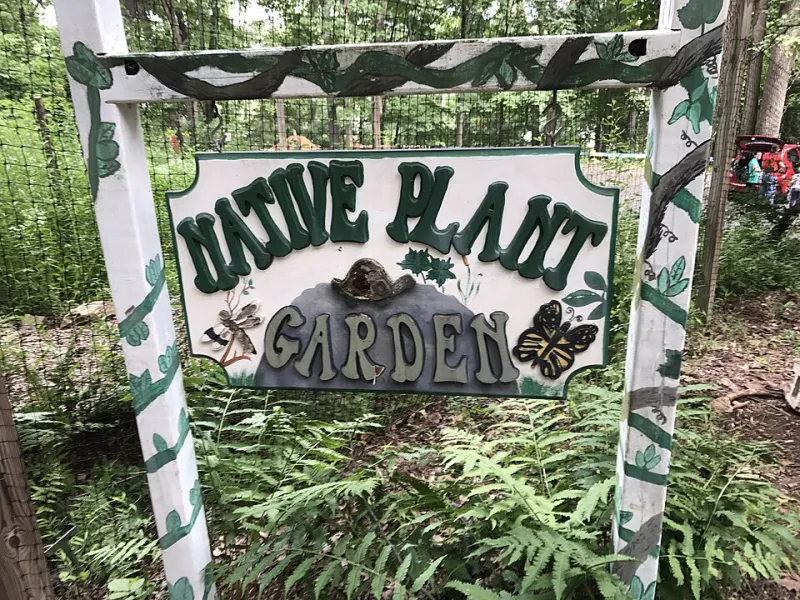
Photo: Magpieturtle, CC BY 4.0, via Wikimedia Commons
On a quarter-acre lot in Columbus, Ohio, what was once a uniform expanse of Kentucky bluegrass now hosts wild bergamot, swamp milkweed, and little bluestem grass that turns a burnished copper each November. Monarch butterflies, whose populations have declined by more than 80 percent over the past two decades, stop here during their migration south. The homeowner, a retired schoolteacher named Patricia Voss, did not set out to become an ecological steward. She started, as many do, simply by deciding she was tired of mowing.
What Voss stumbled into is one of the more consequential grassroots environmental movements in contemporary American life. Suburban rewilding — the deliberate conversion of managed, chemical-dependent lawns into diverse, ecologically functional landscapes — is gaining momentum in cities and towns from the Pacific Northwest to the Mid-Atlantic. It is being driven not by policy mandates or corporate initiatives, but by individual homeowners who have connected the degraded state of local ecosystems to the patch of earth directly outside their door.
The Ecological Cost of the American Lawn
To understand why this movement matters, it helps to appreciate the scale of what it is working against. Turfgrass covers an estimated 40 to 50 million acres of the contiguous United States — more land than is devoted to any single irrigated crop. Maintaining this vast green monoculture requires approximately 9 billion gallons of water per day, along with roughly 80 million pounds of pesticides and 3 million tons of synthetic fertilizer annually, according to figures compiled by the EPA and various university extension programs.
The ecological consequences of this system are substantial. Conventional lawns provide negligible habitat value for native wildlife. Their compacted soils absorb stormwater poorly, contributing to runoff that carries nitrogen and phosphorus into waterways — a primary driver of the algal blooms degrading water quality from the Chesapeake Bay to Lake Erie. And because turfgrass is typically not native to the regions where it is planted, it supports almost none of the specialized insect communities that have co-evolved with regional flora over millennia.
Entomologist Doug Tallamy at the University of Delaware has spent years quantifying this last point. His research demonstrates that native oak trees support over 500 species of caterpillars, while the ornamental plants common to most suburban landscapes — burning bush, Bradford pear, Japanese barberry — support fewer than five. Since caterpillars are the primary food source for nesting songbirds, the composition of suburban plantings has cascading effects throughout the food web.
What Rewilding Actually Looks Like
The term "rewilding" can conjure images of unmanaged chaos — a yard consumed by weeds and bramble. The reality practiced by most suburban rewilders is considerably more intentional. It involves selecting native plant communities appropriate to the local region, designing for visual interest across seasons, and managing the transition carefully to prevent invasive species from filling the void left by removed turf.
In Portland, Oregon, landscape designer Marcus Chen has spent the past six years helping homeowners convert conventional front yards into what he calls "layered native systems" — designs that mimic the structural complexity of natural plant communities by combining canopy trees, understory shrubs, groundcovers, and herbaceous perennials. "The goal is not wildness for its own sake," Chen explains. "It's function. A layered planting manages water, builds soil, feeds insects, and looks beautiful doing it. A lawn does none of those things."
Rain gardens — shallow, planted depressions designed to capture and infiltrate stormwater runoff — are a frequent component of these conversions. A properly sized rain garden can absorb 30 percent more water than a conventional lawn area of equivalent size, according to research from the University of Wisconsin-Extension. In urban watersheds where impervious surfaces have dramatically increased flood risk, the aggregate effect of many residential rain gardens can be measurable at the watershed scale.
The Carbon Equation
Carbon sequestration is another dimension of suburban rewilding that is attracting scientific attention. Deep-rooted native perennial plants — particularly prairie species like switchgrass, prairie dropseed, and coneflowers — transfer substantial carbon into the soil through their root systems, carbon that persists long after the aboveground portion of the plant dies back each winter. Research from The Nature Conservancy and several land-grant universities suggests that converted suburban plots can become modest but meaningful carbon sinks over time, particularly as soil biology recovers from years of compaction and chemical treatment.
This is not a solution to climate change at the scale of industrial decarbonization — it would be misleading to suggest otherwise. But when aggregated across the tens of millions of residential properties in the United States, the potential for suburban landscapes to contribute to carbon storage while simultaneously delivering co-benefits in water quality, biodiversity, and heat island reduction represents a genuinely significant opportunity.
Navigating HOAs and Local Regulations
One of the most practical obstacles facing homeowners who want to rewild their yards is navigating the web of homeowners association rules and municipal ordinances that govern lawn appearance. Many HOA covenants were written with the assumption that a well-maintained property means short, uniform turfgrass, and enforcement actions against homeowners with native plantings have occurred in states including Michigan, Florida, and Texas.
The regulatory landscape is shifting, however. Florida enacted its Florida-Friendly Landscaping Law, which restricts HOA authority to prohibit water-efficient native plantings. Maryland passed legislation protecting homeowners who establish pollinator gardens. Several municipalities, including Coral Gables, Florida, and Maplewood, New Jersey, have developed formal programs to certify and publicly recognize rewilded yards, effectively reframing them as civic assets rather than code violations.
For homeowners navigating less supportive regulatory environments, landscape professionals who specialize in rewilding generally recommend a gradual, well-documented approach: starting with backyard conversions, maintaining clear visual borders and defined pathways to signal intentionality, and engaging proactively with neighbors and HOA boards before making changes.
A Practical Roadmap for Getting Started
For readers considering their own conversion, the process is more accessible than it may initially appear.
Begin with a regional plant palette. The National Wildlife Federation's Native Plant Finder (nwf.org/nativeplantfinder) allows users to enter a zip code and receive a list of native species suited to their specific region. Local native plant societies — present in virtually every state — offer additional expertise and often host plant sales in spring and fall.
Assess your site conditions honestly. Sun exposure, soil drainage, and existing moisture patterns will shape which plants thrive. A site assessment, even an informal one, prevents the costly mistake of planting sun-loving prairie species in a shaded yard.
Kill the grass strategically. Sheet mulching — layering cardboard directly over existing turf and covering it with several inches of wood chip mulch — is an effective, chemical-free method for transitioning a lawn area. The cardboard suppresses grass while decomposing to feed soil organisms; most areas are ready for planting within one growing season.
Plant densely to suppress weeds. One of the most common mistakes in early rewilding projects is leaving too much bare soil, which invasive species will colonize rapidly. Dense planting from the outset reduces long-term maintenance significantly.
Document and share. The rewilding movement grows through visibility. Photographing a yard's transformation and sharing it through neighborhood platforms, local Facebook groups, or programs like the National Wildlife Federation's Certified Wildlife Habitat program helps normalize what neighbors might otherwise find unfamiliar.
The Neighborhood as Habitat Network
Perhaps the most compelling insight emerging from rewilding research is the concept of habitat connectivity. Individual yards, however thoughtfully planted, have limited ecological reach. But when multiple adjacent properties incorporate native plantings, they begin to function as corridors — pathways through which insects, birds, and small mammals can move across an otherwise fragmented suburban landscape.
At Green String Institute, we see in this movement a rare alignment between individual action and systemic ecological benefit. The suburban lawn, for all its cultural staying power, is a relatively recent invention. The landscapes that preceded it — the oak savannas, tallgrass prairies, coastal meadows, and riparian woodlands that once defined American regions — were infinitely richer in biological terms. Rewilding does not promise to restore those ecosystems in their original form. But it does offer something genuinely meaningful: the chance to participate, on whatever scale one's property allows, in the slow work of ecological recovery.