Backyard Bins, Global Stakes: The Surprising Climate Science Behind Residential Composting
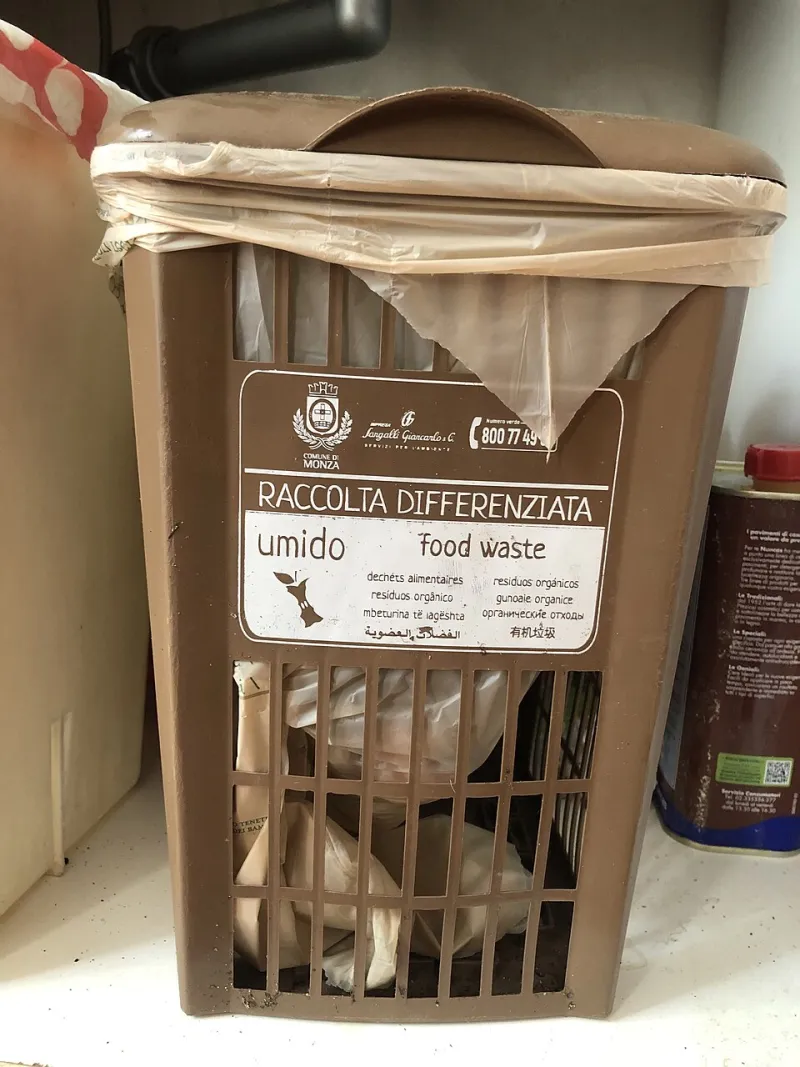
Photo: M&A, CC BY-SA 4.0, via Wikimedia Commons
For decades, composting has occupied a comfortable but modest corner of American environmental culture—a virtuous habit practiced by the particularly dedicated, praised at farmers markets, and largely ignored by climate policymakers. That framing is now under significant scientific pressure. Researchers studying soil carbon dynamics, methane emissions, and microbial ecology are arriving at a convergent and striking conclusion: the humble backyard compost bin may be one of the most underestimated climate tools available to ordinary Americans.
What Happens When Organic Waste Doesn't Go to the Landfill
To understand why composting carries genuine climate weight, it helps to trace the alternative pathway. When food scraps and yard waste are buried in conventional landfills, they decompose in anaerobic conditions—environments sealed from oxygen. That process generates methane, a greenhouse gas roughly 80 times more potent than carbon dioxide over a 20-year period. The United States Environmental Protection Agency consistently ranks municipal solid waste landfills among the country's largest sources of anthropogenic methane emissions.
Home composting intercepts organic material before it enters that anaerobic cycle. Aerobic decomposition—the kind that occurs in a well-managed backyard bin—produces carbon dioxide and water vapor rather than methane. While carbon dioxide is itself a greenhouse gas, the climate math still favors composting dramatically: preventing a unit of methane from forming is categorically more valuable in the near term than releasing an equivalent unit of carbon dioxide.
But methane prevention is only the beginning of the story.
The Soil Carbon Equation
Dr. Elaine Swanson, a soil ecologist affiliated with a land-grant university in the Pacific Northwest, has spent the better part of a decade examining what happens to carbon once finished compost is applied to residential soils. Her research, conducted across suburban test plots in Oregon and Washington, suggests that compost-amended soils demonstrate measurably higher rates of stable carbon retention compared to soils managed with synthetic fertilizers.
"What we're seeing isn't just nutrient cycling," Swanson explained during a recent research symposium. "We're seeing the construction of organo-mineral complexes—carbon molecules that bond with soil particles in ways that resist microbial breakdown for decades, sometimes centuries. Residential composting, at scale, is creating distributed carbon sinks in places we've never thought to measure."
This concept—stable carbon sequestration as an emergent property of compost-amended residential soil—has begun reshaping how some climate researchers categorize home composting. Rather than placing it under the umbrella of waste reduction, a growing contingent argues it belongs in the same conversation as afforestation, wetland restoration, and direct air capture.
Sensor Networks and the Citizen Science Frontier
Quantifying these effects at the household level has historically been difficult. Composting is decentralized by nature, spread across millions of individual properties with wildly varying management practices, feedstock compositions, and soil types. That measurement gap is now closing, thanks in part to a coalition of environmental researchers and technology developers who have built low-cost sensor arrays specifically designed for residential compost monitoring.
The Distributed Organic Carbon Initiative, a research collaborative currently operating across test households in California, Colorado, Minnesota, and North Carolina, has equipped participating homes with sensors that measure temperature, moisture, carbon dioxide flux, and methane output at the compost bin itself, as well as soil carbon probes installed in adjacent garden beds. The data streams in real time to a centralized research platform, where it is aggregated, anonymized, and analyzed.
Preliminary findings from the initiative's first full monitoring year are drawing attention. Participating households collectively prevented an estimated 4.2 metric tons of methane-equivalent emissions—a figure that, when converted to carbon dioxide equivalents using standard 20-year global warming potential metrics, rivals the annual emissions offset of removing two mid-size passenger vehicles from the road per household. Simultaneously, soil carbon measurements in compost-amended beds showed accumulation rates between 0.3 and 0.8 metric tons of carbon per hectare annually—modest by industrial standards, but significant when extrapolated across the tens of millions of American homes with suitable yard space.
"What surprises people is the compounding effect," said Marcus Delray, a data scientist working with the initiative. "Year one looks incremental. Year five starts to look like infrastructure."
Scaling the Intervention: What Would It Actually Take?
The United States currently has approximately 93 million single-family homes, a large proportion of which generate compostable organic waste without any formal diversion system. If even a fraction of those households adopted managed composting practices, the aggregate climate impact would be substantial—and unlike many proposed carbon capture technologies, the infrastructure cost would be distributed rather than centralized.
Cost-effectiveness analyses emerging from institutions including the University of Vermont's Gund Institute for Environment suggest that residential composting programs, when implemented through municipal support structures—subsidized bin distribution, community education, and soil amendment incentive programs—can achieve carbon sequestration at a cost competitive with or below many industrial carbon capture proposals currently receiving significant federal attention.
There are legitimate challenges to address. Composting done poorly—anaerobic, waterlogged, or contaminated with non-compostables—can itself produce methane and undermine the climate calculus. Standardized education and accessible technical support remain critical variables. Urban households without yard access face structural barriers that require creative policy solutions, including community composting hubs and municipal collection programs designed around aerobic processing.
The Microbial Dimension
Beneath the carbon accounting lies a biological story that scientists find equally compelling. Healthy compost is teeming with microbial communities—bacteria, fungi, protozoa, and nematodes—that don't simply disappear when the compost is applied to garden soil. They migrate into the existing soil ecosystem and, in many documented cases, enhance the metabolic activity of native microbial populations in ways that further promote carbon stabilization.
This microbiome dimension connects residential composting to broader research frontiers in regenerative agriculture and soil health. The same fungal-bacterial partnerships that researchers are studying in agricultural contexts appear in miniature form in well-managed backyard systems. Every finished bin of compost is, in a real sense, a microbial inoculant—a living amendment that builds biological complexity into urban and suburban soils that have often been depleted by decades of chemical lawn management.
Rethinking the Scale of Possibility
The instinct in climate policy is to look toward the large and the centralized: utility-scale renewable energy installations, carbon capture facilities, industrial methane monitoring systems. Those interventions matter. But the emerging science of residential composting invites a parallel instinct—toward the distributed, the participatory, and the biologically intelligent.
America's backyards, collectively, represent an enormous and largely unmobilized ecological resource. The soil beneath suburban lawns and kitchen gardens has been shaped by decades of management decisions, most of them made without any awareness of their climate consequences. Composting offers a pathway to begin reversing that trajectory at a scale that requires no federal permitting, no massive capital investment, and no technological breakthrough.
The science is not yet complete. Longitudinal studies are ongoing, measurement methodologies are still being refined, and questions about regional variability remain open. But the direction of the evidence is clear enough to warrant treating residential composting as a legitimate climate intervention—one that happens to begin with a pile of vegetable scraps and a little patience.