Six-Legged Sentinels: The Science Behind Native Pollinator Decline and the Citizen Researchers Documenting It in Real Time
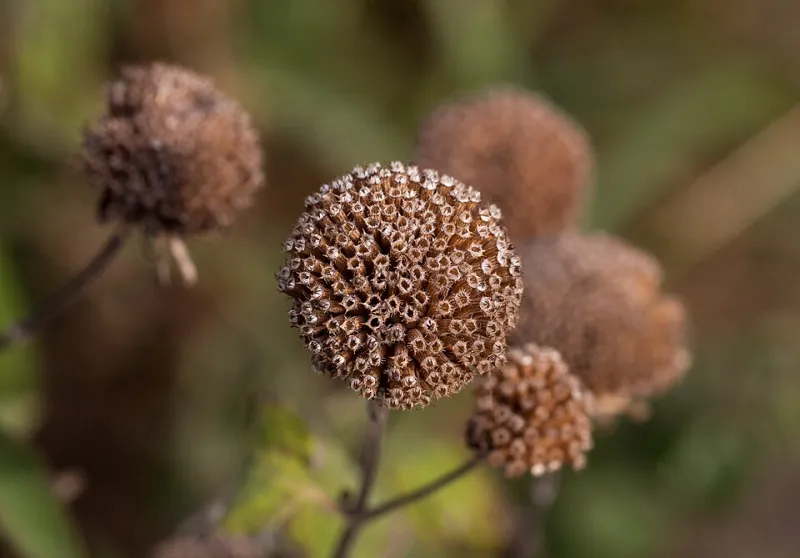
Photo: Rhododendrites, CC BY-SA 4.0, via Wikimedia Commons
There is a quietness settling over American backyards that has nothing to do with weather. Fewer wings beat through the coneflowers. Fewer moths circle the porch light after dark. Fewer bumblebees work the clover. For decades, this silence accumulated gradually enough that most people attributed it to seasonal variation or personal inattention. Scientists, however, have been paying close attention—and what the data describe is not ordinary fluctuation. It is collapse.
The United States is home to more than 4,000 native bee species, alongside thousands of moth and butterfly species that evolved alongside North American flora over millions of years. According to assessments published by the Xerces Society for Invertebrate Conservation, more than half of native bee species in North America are experiencing population declines, with roughly one in four species facing elevated extinction risk. Monarch butterfly populations have declined by more than 80 percent over the past two decades. Some native bumblebee species, once common from coast to coast, have contracted to fragments of their historical range.
Understanding why this is happening—and what can realistically be done about it at the scale where most Americans actually live—is one of the more urgent ecological challenges of our time.
A Convergence of Pressures
No single factor explains the decline of native pollinators, which is partly what makes the problem so difficult to communicate and so resistant to simple remedies. Researchers consistently identify a cluster of interacting stressors that compound one another's effects.
Pesticide exposure remains among the most thoroughly documented drivers. Neonicotinoids—a class of systemic insecticides widely applied to crops, nursery plants, and residential lawns—persist in plant tissue and soil long after application. Studies published in journals including Science and PLOS ONE have linked sublethal neonicotinoid exposure to impaired navigation, reduced reproductive success, and compromised immune function in native bees. Critically, many ornamental plants sold at major US garden retailers are pre-treated with neonicotinoids at the nursery level, meaning consumers may be introducing chemical contamination into their gardens without any awareness of having done so.
Habitat fragmentation represents a structural problem of comparable severity. As native meadows, hedgerows, and forest edges have been converted to turf grass, pavement, and managed ornamental plantings, the patches of flowering habitat that pollinators require for foraging and nesting have become smaller, more isolated, and less diverse. Native bees are not generalists capable of traveling indefinitely between resources—most species operate within defined foraging radii, and when suitable habitat disappears from that radius, local populations cannot persist.
Climate disruption introduces a third layer of instability. Phenological mismatches—disruptions to the timing relationships between flowering plants and the insects that depend on them—are increasingly well-documented. When spring arrives earlier in some years and later in others, the synchrony between, say, a specialist bee species and the specific plant genus it evolved to pollinate can break down, leaving both parties ecologically stranded.
Suburbs as Ecological Actors
For much of the twentieth century, residential landscapes were treated as aesthetic spaces largely peripheral to serious conservation discussion. That framing has shifted substantially. Research by entomologist Doug Tallamy at the University of Delaware, among others, has established that the cumulative acreage of American residential yards—estimated at roughly 40 million acres of lawn alone—represents an ecological force of significant magnitude. Whether that force operates as a sink or a source for biodiversity depends almost entirely on how individual homeowners manage it.
This reframing has important implications. It means that the aggregate of millions of small, individually modest landscaping decisions constitutes a form of distributed conservation infrastructure—one that no federal agency manages and no single policy can mandate, but that is nonetheless capable of producing continental-scale ecological outcomes.
Citizen Science Enters the Equation
Recognizing both the scale of the problem and the distributed nature of potential solutions, ecologists and conservation organizations have invested significantly in citizen science platforms designed to turn residential observers into rigorous data contributors.
The Great Sunflower Project, based at San Francisco State University, enlists volunteers across the country to observe and record pollinator visits to standardized plantings—primarily native sunflowers—in their own yards. The resulting dataset, now spanning millions of observations, has allowed researchers to map pollinator service gaps across urban, suburban, and rural landscapes with a geographic resolution that would be impossible to achieve through professional survey alone.
Bumble Bee Watch, a collaborative platform developed by the Xerces Society and several university partners, asks participants to photograph and submit bumblebee sightings using a species identification interface. The platform has already contributed to updated range assessments for multiple species and has helped identify refugia—areas of unexpectedly persistent population density—that might otherwise have gone undetected.
The iNaturalist platform, while not pollinator-specific, has become one of the most consequential biodiversity monitoring tools available to researchers, with American users contributing hundreds of thousands of insect observations annually. Machine-learning-assisted identification has dramatically reduced the expertise barrier for participation, allowing homeowners with smartphones to generate taxonomically useful records.
What these programs share is a feedback loop that benefits both science and participants. Homeowners who begin monitoring their yards tend to become more attentive observers of ecological change over time—and more motivated to make habitat modifications that improve the outcomes they are tracking.
What the Evidence Supports at the Yard Scale
The research literature on residential pollinator habitat is now substantial enough to offer actionable guidance with reasonable confidence.
Native plantings consistently outperform ornamental alternatives in supporting pollinator diversity and abundance. Studies comparing yards planted primarily with native flowering species to those dominated by exotic ornamentals document significantly higher bee species richness and visitation rates in the former. The effect is not marginal—in some studies, native plant yards support four to five times the pollinator abundance of conventional ornamental landscapes.
Reducing or eliminating synthetic pesticide use produces measurable benefits within a single growing season. Research tracking pollinator populations in yards transitioning away from pesticide use documents recovery trajectories that, while variable, are often detectable within one to three years.
Leaving structural habitat intact—patches of bare soil for ground-nesting bees, standing dead stems for cavity nesters, leaf litter for overwintering larvae—addresses nesting deficits that flowering plants alone cannot resolve. Roughly 70 percent of native bee species nest in the ground; a yard without any exposed soil is effectively a yard without bee nurseries.
Reducing lawn area in favor of layered plantings expands both foraging and nesting resources simultaneously. Even modest conversions—a 10-by-10-foot meadow patch, a foundation bed replaced with native shrubs—contribute meaningfully to local population support when replicated across a neighborhood.
Turning Data Into Direction
The significance of citizen science in this context extends beyond population monitoring. When homeowners generate longitudinal data on pollinator activity in their own yards, those data become evidence of what works—and what does not—under real-world residential conditions. A yard in suburban Ohio that documents a 40 percent increase in native bee species richness following a pesticide-free, native-planting conversion is not merely an anecdote. Aggregated with thousands of similar observations, it is a dataset.
That dataset, in turn, informs the recommendations that conservation organizations, cooperative extension programs, and municipal sustainability offices use to guide public outreach. The loop from individual yard to continental ecological understanding is genuine, and it closes faster than most participants realize.
The pollinator crisis unfolding across American residential landscapes is real, measurable, and serious. It is also, to a meaningful degree, reversible—not through large-scale federal intervention alone, but through the distributed, evidence-informed choices of homeowners who understand what their yards are capable of becoming. The insects that remain are still here, still searching for the habitat that once sustained them. The question is whether we are willing to provide it.