Power to the People: How Rural Energy Co-ops Are Rewriting the Rules of America's Electricity Future
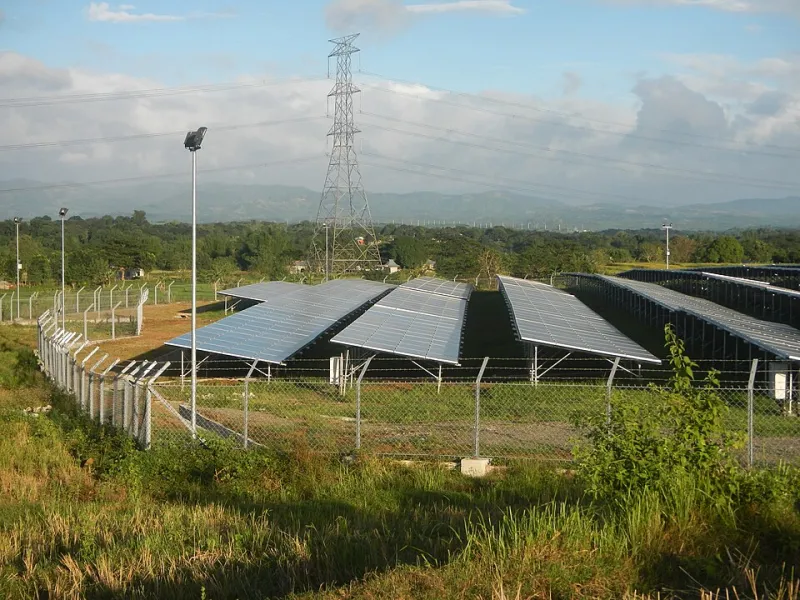
Photo: Judgefloro, CC0, via Wikimedia Commons
For most of the twentieth century, rural America's relationship with electricity was defined by a single transformative institution: the electric cooperative. Born from the New Deal's Rural Electrification Administration, these member-owned utilities brought power to farms and small towns that investor-owned utilities had deemed unprofitable to serve. Today, more than 900 electric cooperatives still operate across 48 states, serving approximately 42 million people. Now, a new generation of cooperative energy development is building on that legacy — not merely to distribute power, but to generate it, own it, and derive lasting economic benefit from it at the community level.
This emerging movement encompasses farmer-owned wind and solar installations, community solar gardens that allow households without suitable rooftops to access renewable electricity, and hybrid energy systems that pair generation with local storage. What unites these initiatives is a fundamental departure from the corporate utility model: revenues stay in the community, decisions are made by members rather than shareholders, and the land itself remains in agricultural or community use rather than being converted into a purely industrial asset.
The Corporate Alternative and Its Discontents
To appreciate what community co-ops offer, it is useful to examine what they are reacting against. The past decade has seen an extraordinary expansion of utility-scale renewable energy development across the rural Midwest, Great Plains, and Southwest. Corporate solar and wind farms have transformed millions of acres, often leasing land from individual farmers at rates that, while providing some income, transfer the substantial majority of long-term value to distant investors.
The economic geography of this arrangement is not incidental. A 2022 analysis by the Institute for Local Self-Reliance found that community-owned renewable projects retain two to seven times more economic value locally than equivalently sized corporate installations. When a multinational energy company constructs a wind farm in rural Iowa, the construction jobs are temporary, the operational workforce is minimal, and the revenue flows to corporate headquarters and institutional investors rather than circulating through local businesses, schools, and tax bases.
Beyond economics, community members in several states have raised concerns about the siting of large corporate renewable projects — noise, visual impact, effects on migratory bird corridors — without meaningful local input. The irony of green energy development generating rural opposition is not lost on environmental advocates, who recognize that the transition to renewables must maintain democratic legitimacy to succeed at the scale required.
Case Study: The Minnesota Model
Minnesota has emerged as one of the most instructive laboratories for community energy development in the United States. The state's Community Solar Garden program, launched in 2013, allows subscribers — including renters, low-income households, and small businesses — to purchase a share of a solar installation and receive credits on their utility bills proportional to their share's output. Critically, the program's structure has enabled locally rooted developers and cooperatives to compete alongside larger commercial operators.
Grow Solar, a partnership that has facilitated group purchasing of solar installations for farms and rural businesses across the upper Midwest, exemplifies a complementary model. By aggregating demand and negotiating collectively, participating farms have achieved installation costs significantly below market rate while retaining full ownership of their systems. For grain and livestock operations working on thin margins, the ability to lock in predictable, low-cost electricity over a twenty-five-year horizon represents a meaningful financial stabilizer.
In Minnesota's Nobles County, the Nobles County Soil and Water Conservation District partnered with local farmers to develop a community wind project that has returned millions of dollars in lease payments and tax revenue to the county since its completion. The contrast with neighboring corporate wind installations — which export the bulk of their financial returns — is quantifiable and has influenced subsequent county-level energy policy.
Financing the Transition: Barriers and Breakthroughs
The cooperative model faces structural financing challenges that its corporate competitors do not. Tax equity financing — the dominant mechanism for funding renewable energy development in the United States — has historically required large, sophisticated investors to efficiently monetize federal tax credits. Small cooperatives and community organizations lack the capitalization to participate directly in these structures, placing them at a competitive disadvantage relative to utilities and private equity-backed developers.
The Inflation Reduction Act of 2022 introduced direct pay provisions that allow tax-exempt entities, including cooperatives and nonprofit organizations, to receive direct cash payments equivalent to the value of certain renewable energy tax credits rather than needing a tax equity partner to monetize them. Early implementation has been uneven, and rural energy advocates have called for additional technical assistance resources to help small organizations navigate the application process. Nevertheless, this policy shift is broadly regarded as the most significant structural improvement for community energy financing in a generation.
USDA's Rural Energy for America Program (REAP) provides grants and loan guarantees for agricultural producers and rural small businesses pursuing renewable energy installations. Demand for REAP funding consistently exceeds available appropriations, a gap that rural development advocates have pressed Congress to address in successive farm bill negotiations. The 2023 farm bill process renewed attention to these funding levels, though final outcomes remained contested as of this writing.
The Social Dimension of Local Ownership
The benefits of community energy cooperatives extend beyond the financial. Research on community energy projects in the US and Europe consistently finds that local ownership increases public acceptance of renewable development, reduces opposition to siting, and strengthens social cohesion around shared economic goals. When a wind turbine is owned by a farmers' cooperative rather than a distant corporation, the relationship between the community and the infrastructure changes in ways that have tangible consequences for long-term project success.
For Indigenous communities and communities of color that have historically borne disproportionate environmental burdens from energy infrastructure, cooperative ownership offers a means of ensuring that the renewable transition does not replicate extractive patterns in green form. Several tribal nations in the Northern Plains and Southwest are developing tribally owned solar and wind projects that combine energy sovereignty with economic development — a convergence that reflects the cooperative model's capacity to address equity and environmental goals simultaneously.
Regulatory Terrain and the Path Forward
State-level utility regulation remains one of the most significant determinants of community energy's viability. In states where investor-owned utilities maintain strong influence over public utility commissions, rules governing interconnection, net metering, and community solar program design have sometimes been structured in ways that disadvantage smaller community developers. Advocates in states including Arizona, Georgia, and Virginia have engaged in sustained regulatory proceedings to challenge these arrangements, with mixed results.
Federal transmission policy is an emerging frontier. The Federal Energy Regulatory Commission's ongoing work on transmission planning and cost allocation will shape whether community energy projects in rural areas can access markets and grid capacity on equitable terms. Rural energy advocates have engaged actively in these proceedings, arguing that transmission reform is inseparable from the goal of broad-based renewable energy ownership.
The cooperative tradition in rural America is not a relic. It is a living institutional form that has demonstrated, across a century of practice, its capacity to deliver essential services in ways that serve community rather than shareholder interests. Applying that tradition to the renewable energy transition is not merely a romantic gesture toward agrarian democracy — it is a pragmatic strategy for ensuring that decarbonization strengthens the communities it touches rather than extracting value from them. The green string connecting soil health, community resilience, and energy sovereignty runs through the same landscape. It is time to follow it.