When the Forest Stops Singing: The Science of Soundscape Ecology and What Silence Is Telling Us
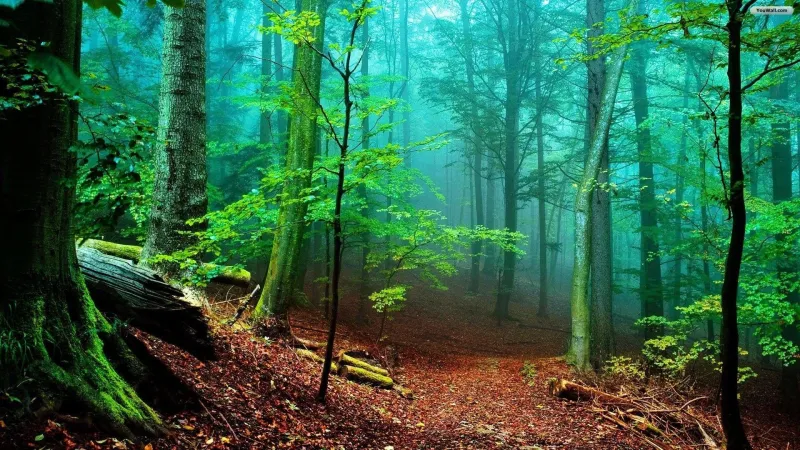
Photo: forest soundscape researcher acoustic monitoring birds nature, via wallpaperaccess.com
There is a particular kind of quiet that settles over a degraded landscape. It is not the restorative silence of a mountain morning or the hush before a thunderstorm. It is an absence—a flattening of the layered, intricate acoustic texture that once characterized living ecosystems. To the untrained ear, it may go unnoticed. To researchers working in the field of soundscape ecology, it is among the most alarming signals a landscape can produce.
Across the United States, scientists are deploying arrays of acoustic sensors in forests, wetlands, prairies, and coastal zones—not to record birdsong for its aesthetic value, but to measure the biological integrity of entire ecosystems. What they are finding is both scientifically illuminating and deeply sobering.
The Language of a Living Landscape
Soundscape ecology, a discipline that gained formal footing in the early 2000s through the foundational work of researchers like Bernie Krause, operates on a deceptively simple premise: healthy ecosystems are acoustically complex, and that complexity is measurable. Krause's concept of the "biophony"—the collective sound produced by living organisms in a given habitat—posits that species evolve to occupy distinct acoustic niches, much as they occupy physical ones. Insects dominate certain frequency bands; frogs and amphibians claim others; birds layer their calls across the spectrum in patterns refined over millennia.
When a habitat begins to degrade—through pesticide application, habitat fragmentation, invasive species pressure, or climate-driven phenological shifts—those acoustic niches start to collapse. Species disappear not in dramatic die-offs that make headlines, but in gradual, overlapping silences. A meadow that once hummed with pollinator activity in July grows quieter each successive summer. A riparian corridor that rang with wood thrush song produces fewer and fewer notes as the canopy thins.
This is precisely what makes sound such a powerful monitoring tool. It captures change in real time, at scale, and without the labor-intensive sampling that traditional biodiversity surveys require.
Listening as an Early Warning System
Researchers at institutions including Purdue University and the Cornell Lab of Ornithology have been refining acoustic indices—mathematical measures derived from audio recordings—that can quantify biodiversity at a given site without identifying a single individual species. Indices such as the Acoustic Complexity Index (ACI) and the Bioacoustic Index (BI) analyze the richness and evenness of sound across frequency ranges, providing a kind of sonic fingerprint for an ecosystem's health.
The implications for conservation monitoring are significant. Traditional ecological surveys are expensive, time-consuming, and episodic. Acoustic monitoring stations can record continuously, transmit data remotely, and flag anomalies in near real time. In the Pacific Northwest, acoustic arrays have been used to track the decline of old-growth-dependent species like the northern spotted owl and marbled murrelet. In the Midwest, researchers have used soundscape analysis to assess the recovery of restored tallgrass prairie, using insect and amphibian vocalizations as proxies for invertebrate and herpetological community health.
Perhaps most urgently, acoustic monitoring is beginning to document what some researchers are calling "ecological amnesia"—the generational forgetting of what a truly biodiverse soundscape sounds like. When today's baseline recordings are compared against archival recordings from the mid-twentieth century, the impoverishment is stark. Krause himself has noted that more than half of the natural habitat recordings in his personal archive, gathered over five decades, now document landscapes that have been acoustically degraded or silenced entirely.
The Noise We Add, and the Sound We Erase
The problem is not only about what is disappearing. It is also about what we are adding. Anthropogenic noise—the constant acoustic output of highways, aircraft corridors, urban development, and industrial agriculture—does not simply coexist with natural soundscapes. It actively disrupts them. Research published in the journal Science demonstrated that noise pollution affects bird communication, foraging behavior, and reproductive success across a broad range of species. Frogs alter the timing and frequency of their calls in response to traffic noise. Bats, which rely on echolocation for both navigation and prey detection, are measurably affected by urban sound environments.
For pollinators, the picture is equally concerning. Emerging research suggests that certain bee species use vibrational cues—buzz pollination, or sonication—that can be disrupted by ambient noise. The acoustic environment, it turns out, is not a backdrop to ecological function. It is part of the mechanism.
What Restoration Sounds Like
The encouraging dimension of soundscape ecology is that it offers a tangible, measurable target for restoration work. If a healthy ecosystem has a characteristic acoustic signature, then recovery can be tracked aurally—and in some cases, sound itself can be used as a restoration tool.
Researchers in Australia and New Zealand have experimented with broadcasting recordings of healthy ecosystems in degraded habitats, attracting wildlife and accelerating community re-establishment. In the United States, similar approaches are being explored for shorebird habitat restoration, where playback of colonial nesting calls has been used to draw breeding species back to restored wetlands.
For ordinary Americans, the implications are more immediate and more actionable than they might appear. Urban and suburban landscapes represent a vast, underutilized opportunity for acoustic restoration. Several practical interventions are worth considering:
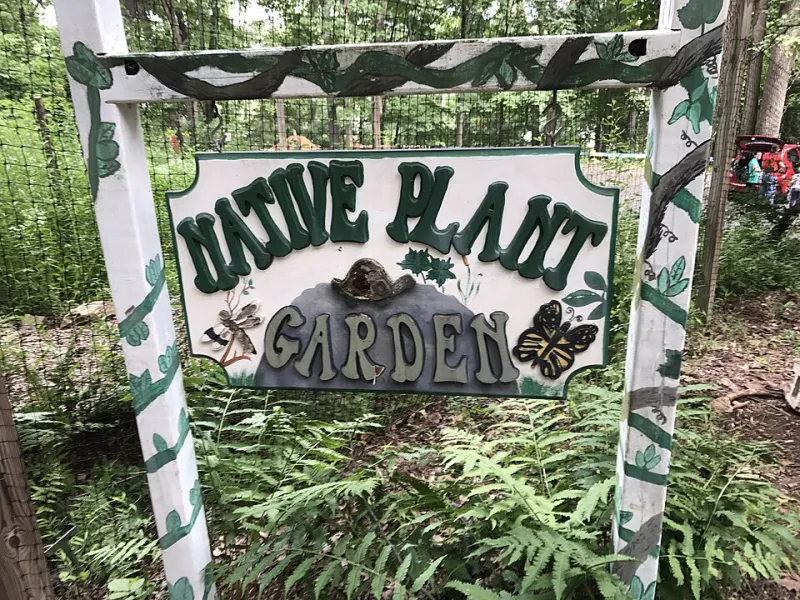
Plant for acoustic habitat. Native flowering plants, shrubs with dense structure, and trees that support insect communities all contribute to the biophony. A yard planted with native species is not merely visually distinct from a conventional lawn—it is acoustically distinct. The hum of native bees, the percussion of woodpeckers, the evening chorus of crickets: these are not incidental pleasures but indicators of functional habitat.
Reduce artificial light at night. Nocturnal acoustic ecology is its own rich domain, and light pollution disrupts it significantly. Many insect species that contribute to nighttime soundscapes are highly sensitive to artificial illumination. Shielded, motion-activated lighting and the elimination of unnecessary overnight illumination can meaningfully reduce this pressure.
Advocate for quiet zones. Several municipalities across the country have begun designating acoustic refuges—parks and natural areas where noise ordinances are enforced and motorized activity is restricted. Supporting such initiatives at the local level is a concrete way to extend the acoustic commons.
Engage with citizen science. Projects like eBird and iNaturalist generate valuable acoustic data, but dedicated soundscape monitoring initiatives such as the Global Soundscape Project and Rainforest Connection are actively seeking volunteer participation and public data contributions.
A Different Way of Listening
There is something philosophically significant about measuring ecosystem health through sound. It asks us to move beyond the visual register that dominates so much of how we perceive and value the natural world. A forest can look intact—green, leafy, apparently undisturbed—while its acoustic community has been hollowed out. Conversely, a recovering habitat may appear scrubby and unremarkable while its soundscape tells a story of returning life.
Learning to hear what landscapes are saying is, in this sense, an act of ecological literacy. The researchers who are building this field are not merely cataloguing loss. They are developing a new grammar for understanding what we mean when we speak of a living place—and what we are committing to when we choose to restore one.
At Green String Institute, we believe that science-driven conservation must continually expand its toolkit. Soundscape ecology represents one of the most promising frontiers in that expansion: rigorous, scalable, and grounded in a truth that anyone who has stood in a genuinely wild place already knows. A living landscape is never silent. And when it falls quiet, we should be listening very carefully to what that silence means.