Threads Beneath the Trees: How Fungal Highways Are Rewriting the Rules of Carbon and Communication in American Forests
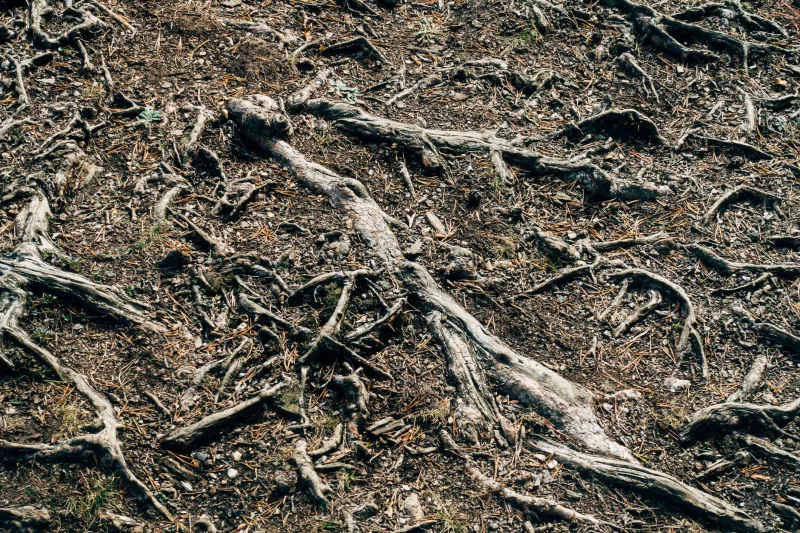
For most of American history, the forest floor has been treated as scenery—a soft, fragrant backdrop to the more legible drama happening above ground. Trees competed for light. Animals competed for territory. The soil was simply the medium through which roots reached for water and minerals. That picture, it turns out, was radically incomplete.
Beneath virtually every forest, meadow, and agricultural field in the United States runs a living infrastructure of extraordinary complexity. Mycorrhizal fungi—organisms that form symbiotic relationships with the roots of roughly 90 percent of all terrestrial plant species—construct dense, branching networks capable of spanning acres. These networks do not merely assist individual plants. They appear to coordinate resource movement across entire plant communities, transferring carbon, phosphorus, nitrogen, and chemical signaling compounds in patterns that researchers are only now beginning to fully decode.
The science emerging from this subterranean world is not just fascinating. It carries urgent practical implications for how the United States manages its forests, redesigns its agricultural systems, and pursues its climate commitments.
Mapping What the Eye Cannot See
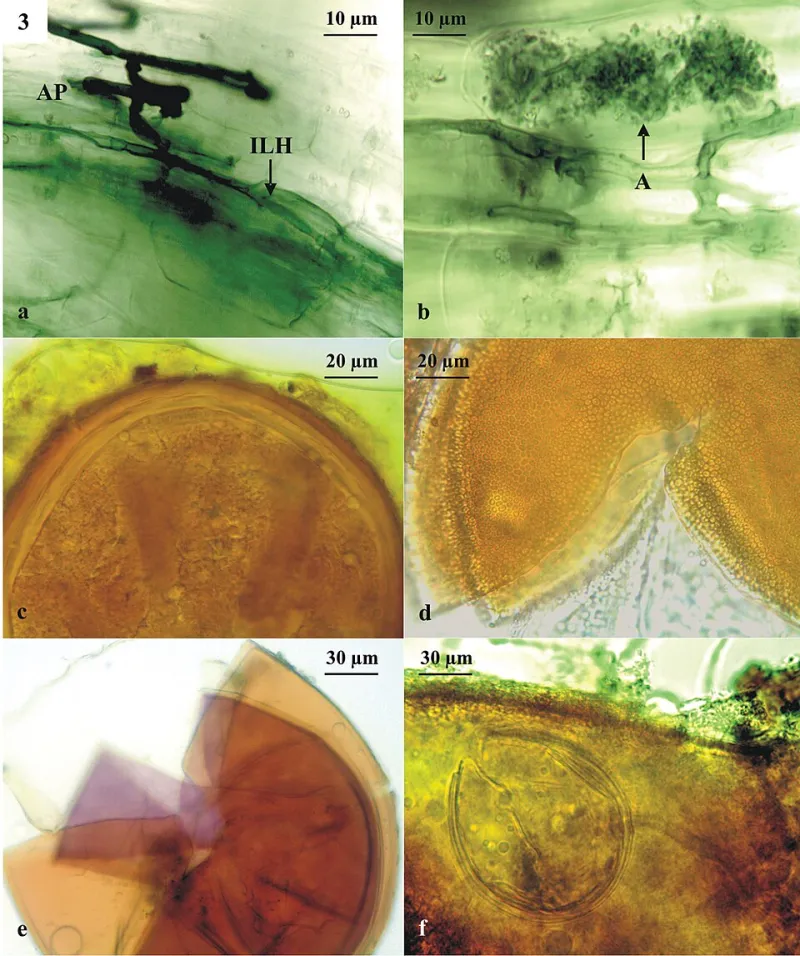
For decades, mycorrhizal research relied on painstaking laboratory work and limited field excavation. Studying a network that can extend for miles through a cubic meter of soil—with individual fungal threads, called hyphae, measuring just a few micrometers in diameter—presented an almost insurmountable observational challenge.
Recent advances in imaging technology have begun to change that. Researchers at institutions including the University of California, Berkeley, and the Pacific Northwest Research Station are employing a combination of stable isotope tracing, X-ray computed tomography, and high-resolution fluorescence microscopy to follow carbon and nutrient flows through intact soil samples in near real time. Isotope labeling, in particular, allows scientists to tag carbon molecules with a detectable signature at the point of photosynthesis and then track where those molecules travel—through root tips, into fungal threads, across to neighboring root systems, and ultimately into the soil matrix itself.
What these methods are revealing is a degree of directionality and apparent selectivity that surprises even veteran researchers. Carbon does not simply diffuse outward from a plant's roots. It moves through mycorrhizal conduits in measurable flows, with some plants functioning as consistent net exporters and others as net importers depending on their size, age, light exposure, and species identity. Mature conifers in Pacific Northwest old-growth stands, for instance, have been documented transferring significant quantities of carbon to younger seedlings growing in their shade—a phenomenon some researchers have informally called the "mother tree" effect, though the mechanisms and evolutionary drivers remain actively debated.
Carbon in Motion: What This Means for Climate Strategy
The climate relevance of mycorrhizal networks extends well beyond the poetic. Soils currently store more carbon than the atmosphere and all terrestrial vegetation combined, and mycorrhizal fungi play a central role in determining how much of that carbon stays put.
Fungal hyphae produce a sticky glycoprotein called glomalin that physically binds soil particles into aggregates. These aggregates protect organic carbon from decomposition, effectively locking it away from the atmosphere on timescales that can span centuries. Forests with robust, intact mycorrhizal communities tend to exhibit substantially higher rates of stable carbon sequestration than those where fungal networks have been disrupted by tillage, chemical inputs, or land-use change.
This creates a direct policy implication. Current federal carbon accounting frameworks for forests and agricultural lands largely treat soil carbon as a static or slowly changing variable. Emerging research suggests it is anything but. The health and connectivity of mycorrhizal networks may be as important a determinant of a landscape's carbon storage capacity as the number of trees standing on it. Incorporating fungal network integrity into carbon measurement protocols—something several research groups are actively advocating—could meaningfully improve the accuracy of American climate models and the design of conservation incentive programs.
Agricultural Systems at a Crossroads
The implications for farming are equally significant, and considerably more immediately actionable. Conventional agricultural practices have, for generations, operated in inadvertent opposition to mycorrhizal health. Deep tillage physically severs fungal networks. Synthetic phosphorus fertilizers suppress mycorrhizal colonization by signaling to plants that external fungal partnerships are unnecessary. Broad-spectrum fungicides eliminate beneficial species alongside harmful ones.
The result, documented across millions of acres of American cropland, is soil that functions as a growing medium rather than a living system—capable of producing yields when heavily amended, but stripped of the biological architecture that would otherwise make those yields more resilient, more efficient, and more carbon-retentive.
A growing cohort of agronomists and soil ecologists are working to reverse this trajectory. Reduced-tillage and no-till farming systems, already expanding across the Midwest under programs supported by the Natural Resources Conservation Service, preserve hyphal networks that would otherwise be destroyed each planting season. Cover cropping—the practice of maintaining living root systems in the soil during fallow periods—sustains mycorrhizal communities through the off-season, preventing the population crashes that accompany bare-soil winters.
More targeted interventions are also advancing. Several agricultural research programs are developing mycorrhizal inoculant products designed to reintroduce appropriate fungal species to degraded soils. Early field trials in corn and soybean systems have shown promising results in reducing synthetic fertilizer requirements while maintaining or improving yields—a combination that, if it scales, would simultaneously lower input costs for farmers and reduce the agricultural sector's substantial greenhouse gas footprint.
Listening to the Network
Perhaps the most philosophically striking dimension of mycorrhizal research involves what some scientists describe as chemical signaling—the possibility that plants use fungal networks not merely to exchange resources, but to transmit information about environmental threats.
Laboratory studies have demonstrated that plants under attack by herbivores or pathogens release volatile and water-soluble chemical compounds that can travel through mycorrhizal connections to neighboring plants, which then upregulate their own defensive chemistry before any direct threat arrives. Whether this constitutes something meaningfully analogous to communication—or is better understood as a biochemical spillover effect—remains a live scientific question. But the functional outcome is increasingly difficult to dispute: connected plants in intact mycorrhizal communities frequently exhibit coordinated responses to stress that isolated plants do not.
For forest managers, this has practical relevance. Forests where mycorrhizal networks are intact may be inherently more resilient to pest outbreaks and drought stress than structurally similar forests where those networks have been compromised. As climate change intensifies both the frequency and severity of such stressors across American landscapes, preserving the biological infrastructure that enables this resilience becomes a management priority, not merely an ecological curiosity.
Redesigning From the Ground Up
The science of mycorrhizal networks is not yet mature enough to prescribe precise management formulas. Much remains contested or incompletely understood, including the degree to which human-designed interventions can reliably replicate the complexity of naturally evolved fungal communities. Researchers are candid about these limits.
What is clear, however, is that the foundational assumption underlying much of American land management—that the soil is a passive substrate rather than an active, interconnected biological system—is no longer scientifically defensible. The networks beneath our forests and farms are not background infrastructure. They are the mechanism through which ecosystems regulate themselves, store carbon, and endure.
Designing agricultural and forestry practices that work with that mechanism, rather than against it, may prove to be one of the more consequential environmental decisions American land managers make in the decades ahead.